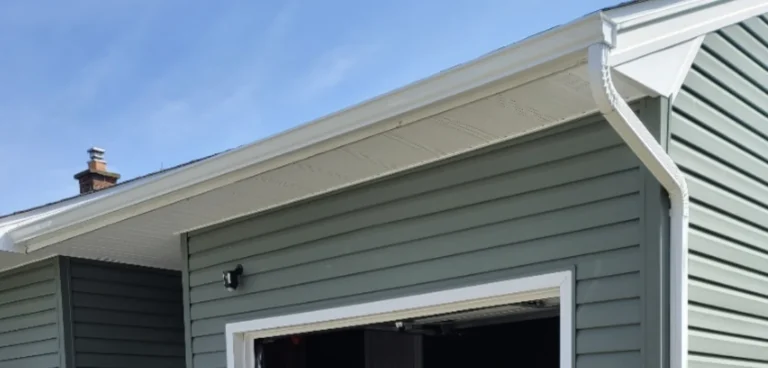
If your gutters are leaking at the corners, holding water, pulling away from the fascia, or overflowing even when they look clear, those are practical signs that repair may no longer be the best use of your money. A replacement assessment looks at the whole gutter line, not just the spot that drips, so you can decide with real information instead of another tube of sealant.
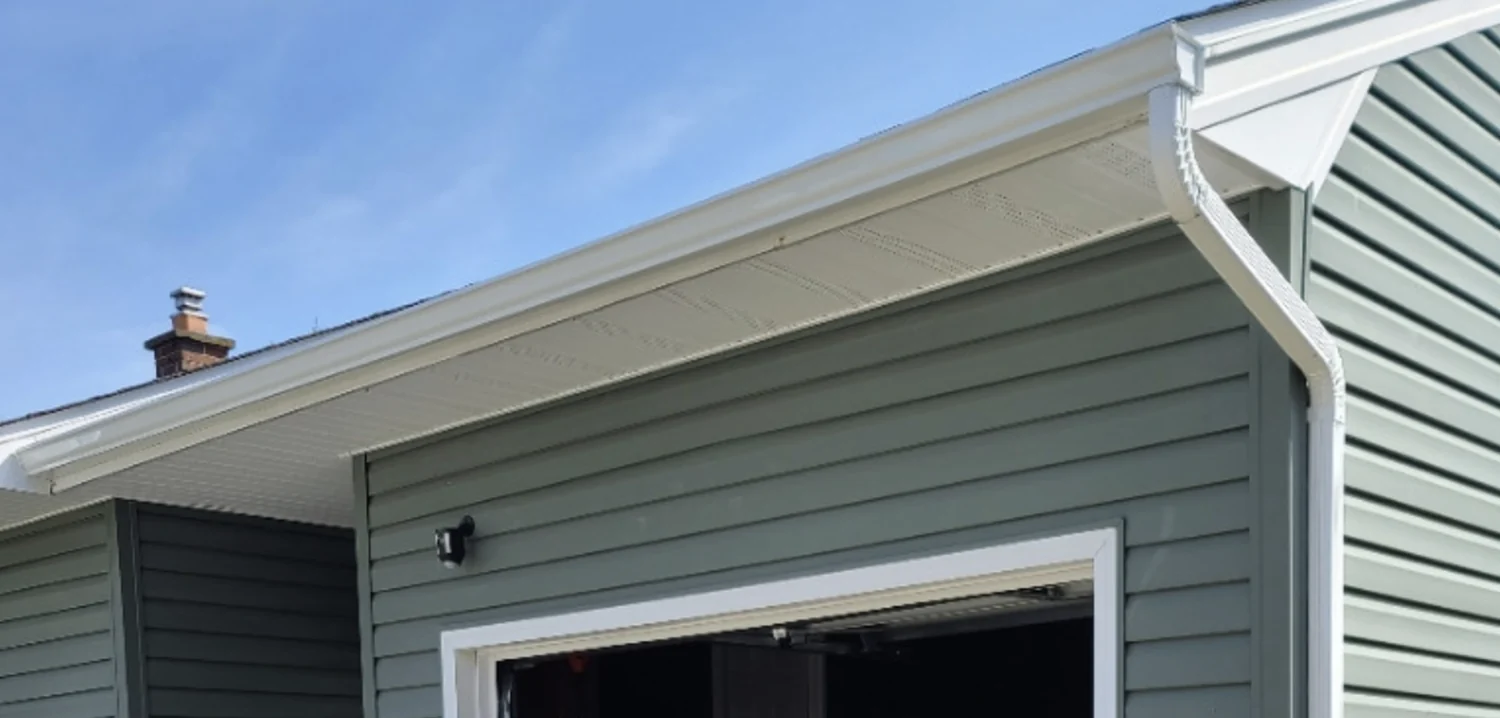
Gutters fail slowly. A hanger loosens, a seam opens a little, water starts running behind the channel instead of through it, and the damage moves into the fascia and siding before most homeowners notice. Western New York makes that process harder on a system: heavy fall rain, a long leaf drop, freeze-thaw cycles, and snow loads that sit on the gutter line for weeks.
Here are seven signs worth taking seriously, plus a plain look at when replacement makes more sense than another small repair.
1. Repeated leaks and failing corners
A leak that comes back every season is telling you something. On sectional gutters, the seams and corner miters are the first places to open. Sealant can close a gap for a while, but it does not stop the movement that opened it. Water finds the same seam again, and each cycle pushes more moisture behind the gutter and into the fascia board.
Watch for:
- Drips at inside and outside corners after rain
- Staining or bubbling paint on the fascia directly below a seam
- Water running down the back of the gutter instead of out the downspout
- End caps that separate or drip steadily
One failed corner on an otherwise sound run can be a repair. Several failing corners, or the same corner reopening year after year, usually points to a system that has reached the end of its useful life.
2. Standing water or poor pitch
After a rain, the gutter should empty. If water sits in the channel hours later, the pitch is wrong, a section has sagged, or the outlet is restricted. Standing water adds weight, speeds up corrosion and finish failure, and gives debris a place to settle. In winter, it becomes ice at the gutter line.
Re-pitching a short, sound run is sometimes practical. It makes less sense when the channel is already sagging in several places, when fasteners no longer hold, or when the gutter was sized for a smaller drainage area than the one above it. In those cases, adjusting the pitch treats the symptom while the underlying problem stays in place.
3. Pulling sections and damaged fascia
Look at the gap between the back of the gutter and the fascia. A healthy run sits tight and consistent. A failing run pulls away at the hangers, dips between fasteners, or hangs lower at one end. Spikes and ferrules can back out of softened wood, and once that happens, no amount of tightening will hold for long.
Damaged fascia is the bigger concern. Soft wood, peeling paint, dark stains, or a spongy feel behind the gutter mean water has been getting in for a while. Replacing the gutter without addressing that wood simply covers the problem. A proper assessment should check the fascia and decking behind it and explain what needs to be repaired before new material goes up. Our article on what happens when new gutters meet damaged fascia covers that sequence in more detail.
4. Overflow that keeps coming back
Overflow does not always mean the gutter is full of leaves. A clean gutter can still spill if it is undersized for the drainage area above, if there are too few downspouts, if a long run has only one outlet, or if a valley dumps directly onto a short section. A blocked underground leader or a downspout that discharges too close to the foundation produces the same result.
Recurring overflow leaves evidence: mud splatter on siding, eroded soil below the discharge point, stains at the foundation, or a damp basement wall after heavy rain. If you have already cleaned the system and the overflow returns in the next storm, the problem is capacity or layout, not debris. Our explanation of why gutters can overflow even when they look clean walks through the common causes.
5. Sagging runs, loose hangers, and separated joints
Stand back from the house and look down the length of the gutter. It should read as one straight line. Dips, waves, or sections that sit lower than their neighbors are signs that the hangers are losing their grip or the material has bent under load.
Aluminum is light and durable, but it is not immune to ice, ladders, or a poorly placed ladder leg. Dents and bends can redirect water, and a bent section often will not seal reliably at the joints. If several hangers are loose and the channel has lost its shape, replacement is usually the cleaner answer than chasing fasteners one at a time.
6. Cracks, holes, corrosion, and patch fatigue
Aluminum does not rust the way steel does, but it can corrode, pit, and crack. Holes from ladder contact, cracks at seams, and repeated failures at the same joint are all repair fatigue. Count how many times you have patched the same run. If the answer is more than once or twice, the material is probably past the point where patches are a good investment.
Finish failure matters too. Peeling paint, chalky surfaces, and exposed metal are signs that the coating has broken down. That is cosmetic at first, but it usually travels with the other problems on this list.
7. Water in the wrong places
The gutter is doing its job when water leaves the gutter line and discharges where it should. It is failing when you see:
- Vertical staining on siding below the gutter line
- Soil washed out at a downspout outlet
- Dampness or efflorescence on a basement wall
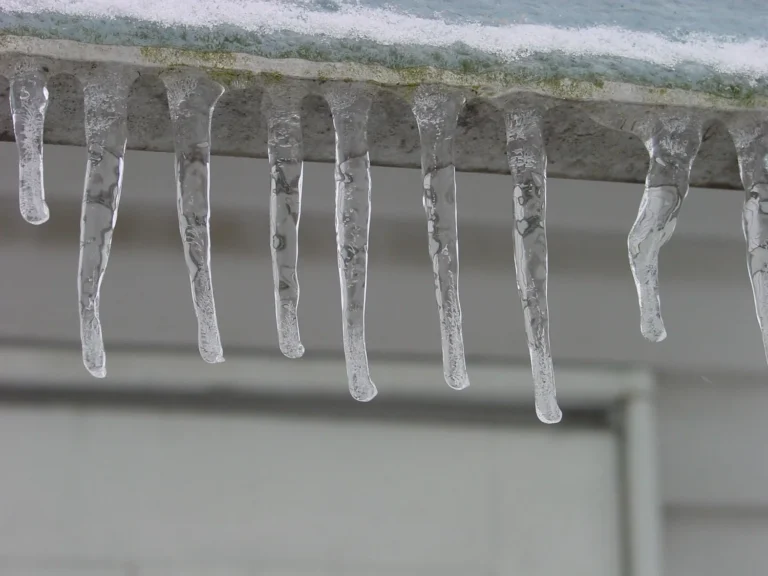
- Ice built up along the gutter line in winter
- Mulch or gravel displaced after a storm
These are not just gutter problems. They are water-management problems, and they tend to get worse rather than settle down on their own.
When replacement may be more sensible than a small repair
Replacement is not automatically the right call. A single loose hanger, one failed end cap, or a localized clog is ordinary maintenance. The calculation changes when several of these are true:
- The problems are spread across multiple runs, not one spot
- The same joints have been repaired repeatedly
- The fascia or decking behind the gutter is damaged
- The system is undersized for the drainage area or the number of downspouts
- The channel has lost its shape and no longer holds pitch
- The material is at the end of its service life and the finish is failing
In those cases, a repair can cost nearly as much as a replacement while leaving the underlying weaknesses in place. A straight answer from an experienced installer is worth more than a sales pitch. Sometimes the honest recommendation is to repair a sound system and leave the rest alone.
What a replacement assessment should include
A useful assessment starts at ground level and looks at the whole system, not just the obvious leak. Expect the installer to measure the runs, count and locate the downspouts, check pitch, inspect the fascia and the decking behind it, and look at where water discharges. On a Western New York home, the conversation should also cover fall leaf load, winter ice, and how the new system will handle both.
Niagara Gutter forms seamless aluminum gutters on site in 0.032-inch material, which is thicker than the common 0.025 and 0.019 stock sold at big-box stores. Thicker material resists denting and bending under water and ice load, and a seamless run removes the joints where many leaks begin. You can read more about the material and process on our seamless gutter service page.
If the timing question is whether to act before winter, our article on replacing failing gutters before a Western New York winter covers that decision in more detail.
If you are seeing several of the signs above, the next step is a measured look at the system rather than another temporary fix. Request a free estimate at https://niagaragutter.com/estimate-request/ or call 716-695-3500. We will tell you what we see, what can be repaired, and what replacement would involve.