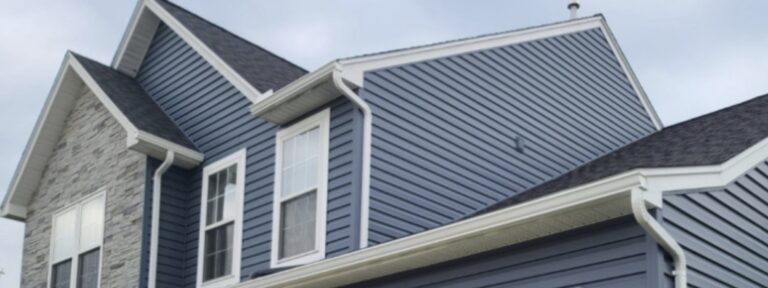
Replacing failing gutters before winter can be worth considering when damage is widespread, sections are pulling away, or the system repeatedly fails to drain properly. Start with a professional assessment rather than a deadline-driven decision. Some concerns are localized, while others point toward replacement. Installation timing depends on Western New York weather and the conditions at your property.
A gutter that caused trouble all summer does not become sound because leaf season ends. At the same time, one leak does not automatically mean you need a complete replacement. The useful decision is based on condition, drainage, attachment, and the work required to give you a sensible system.
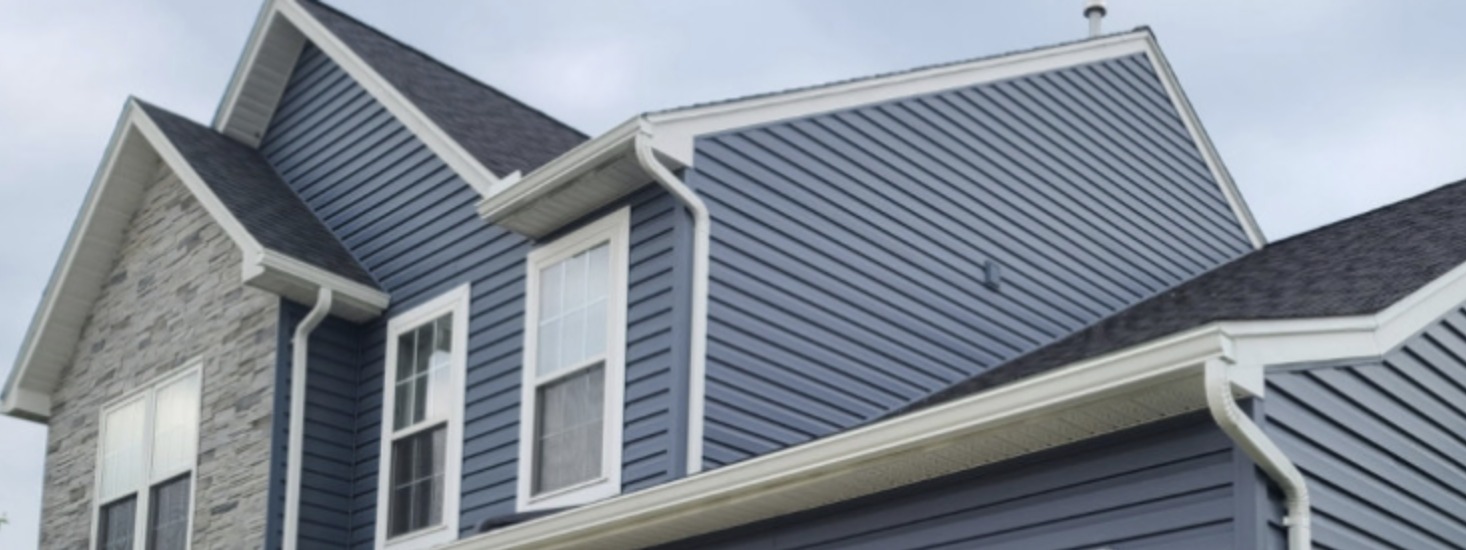
Which problems can cold weather expose?
Western New York winters include snow, freezing temperatures, thaws, and rain. The National Weather Service’s Buffalo climate narrative describes these changing conditions, rather than a season in which everything remains frozen. Your gutter and downspout system still needs a route for water when temperatures rise.
Standing water, a disconnected downspout, or a visibly sagging section is therefore worth describing before winter. Those observations do not prove the cause, but they show where an assessment should begin. Recurring gutter ice at the same spot is another useful part of the history.
Replacing gutters is not a guarantee against ice dams or every winter water problem. Some conditions involve the building beyond the gutter system. A replacement recommendation should explain what the proposed work addresses and what it does not.
Signs replacement deserves consideration
Look from the ground for patterns rather than trying to assign a remaining lifespan to the gutter. Age can inform the conversation, but condition and performance are more useful than a guessed expiration date.
- Several sections are visibly bowed, distorted, or pulling away.
- Leaks or separation keep returning at multiple joints or corners.
- Water repeatedly overflows despite the apparent absence of visible debris.
- Downspouts are damaged, disconnected, or poorly positioned for the property.
- The gutter attachment area shows damaged fascia or related exterior wood.
- Previous work has not resolved the recurring drainage concern.
Keep a note of which issues happen together. A long run that overflows in rain and develops repeated winter ice gives the estimator more context than either observation alone. Photographs from a safe location can help show the affected area.
Do not test a loose gutter by pulling on it, climb beneath overhead ice, or attempt a repair just to see whether it works. Visible movement or instability is a reason to keep clear and seek advice.
Repair or replacement: what should guide the decision?
A professional assessment should consider the overall system, not simply the most obvious symptom. A localized issue in otherwise suitable gutters can be different from widespread deterioration or a layout that repeatedly fails to drain.
Niagara Gutter evaluates repairs individually. It does not promote small standalone repairs or gutter rehanging as primary services. When repair does not make sense as a lasting approach for the existing system, Niagara recommends replacement rather than selling work that leaves the larger problem unresolved.
That does not mean every inquiry leads to new gutters. It means the estimate should identify the proposed scope and the reasoning behind it. Ask what evidence supports replacement, whether affected downspouts are included, and whether exterior wood needs attention within the project.
If another trade is needed, the proposal should not quietly absorb that work into a gutter claim. Niagara is not a roofing, underground drainage, plumbing, or electrical contractor. Issues outside its trade require the appropriate contractor.
What a seamless replacement project should consider
Niagara’s seamless aluminum gutters are measured for the project and fabricated onsite in continuous lengths whenever practical. The plan also needs to address pitch, secure attachment, outlets, and the downspouts that carry water away.
Niagara’s primary residential options include 5-inch and 6-inch gutters. Bigger is not automatically better for every home. Roof area, water flow, building conditions, and the full drainage layout should guide the choice. The downspout plan matters alongside the gutter size.
A replacement estimate should state which existing components will be removed and what new work is included. If fascia, soffit, rafter-tail, or related exterior wood work is appropriate within the project, it should be discussed rather than discovered through a vague description of ‘new gutters.’
Color is another choice to make during estimating. Review the current available selection instead of assuming a photograph online represents a color that is available for your project. Material specifications should likewise match the actual supplied product.
Should you include gutter protection?
If debris buildup is part of the concern, ask about Alu-Rex gutter protection while discussing replacement. Planning gutters and protection together can help clarify compatibility and the complete scope.
Protection is designed to reduce debris buildup and help the gutters function properly. It is not a promise that the system will never require attention. Ask for the exact product, current care instructions, and the written warranty that applies to your proposal.
Niagara does not offer general standalone gutter cleaning. Preparation or cleaning may be included with qualifying guard work, so make sure you are discussing the project you actually need rather than assuming a seasonal cleaning service is available.
What if recurring ice is the main concern?
If the gutters are generally suitable but a gutter or downspout repeatedly freezes, replacement may not be the only question to discuss. Describe the locations and ask whether a Niagara Thaw Systems assessment is appropriate.
The standard Thaw setup focuses professionally installed heat cable on the gutter and downspout drainage path to help maintain a route for meltwater during freezing conditions. It does not repair a failing gutter or make every property ice-free. Any electrical requirements must be assessed and handled by an appropriately qualified contractor.
Do not choose heat cable simply because an advertisement mentions ice, and do not choose replacement simply because winter is coming. The recurring symptom and the system’s condition should lead the recommendation.
Planning a weather-dependent installation
Request an estimate early enough to discuss scope and available scheduling, but do not assume a particular completion date. Niagara’s installation schedule is weather-dependent. Severe rain, snow, ice, high winds, and other conditions can affect safe work and workmanship.
Tell the office about known access issues, shared driveways, other exterior projects, and anything that may affect work around the building. Keep vehicles and obstacles away from the work area as directed when the project is scheduled. For managed properties, identify who can approve access and communicate with occupants.
The office gathers project information and routes the request to the appropriate salesperson. The estimate process includes evaluating the property and discussing options before a proposal. Specific deposits, payment terms, warranties, and scheduling commitments belong in the current proposal, not in assumptions drawn from a general article.
Make the decision around the system, not the season alone
A pre-winter estimate gives you a chance to understand why the gutters are failing and what work is appropriate. Bring your observations, ask about the complete gutter and downspout scope, and compare recommendations on the same basis.
Niagara Gutter primarily serves Niagara and Erie Counties. Call 716-695-3500 or request a free estimate to discuss replacement, qualifying gutter protection, or recurring winter drainage concerns.