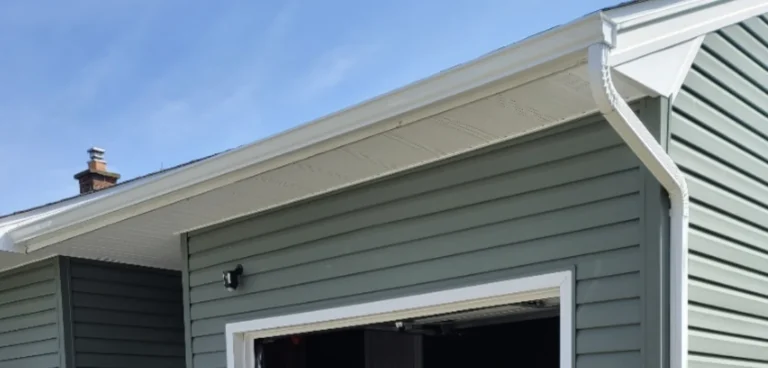
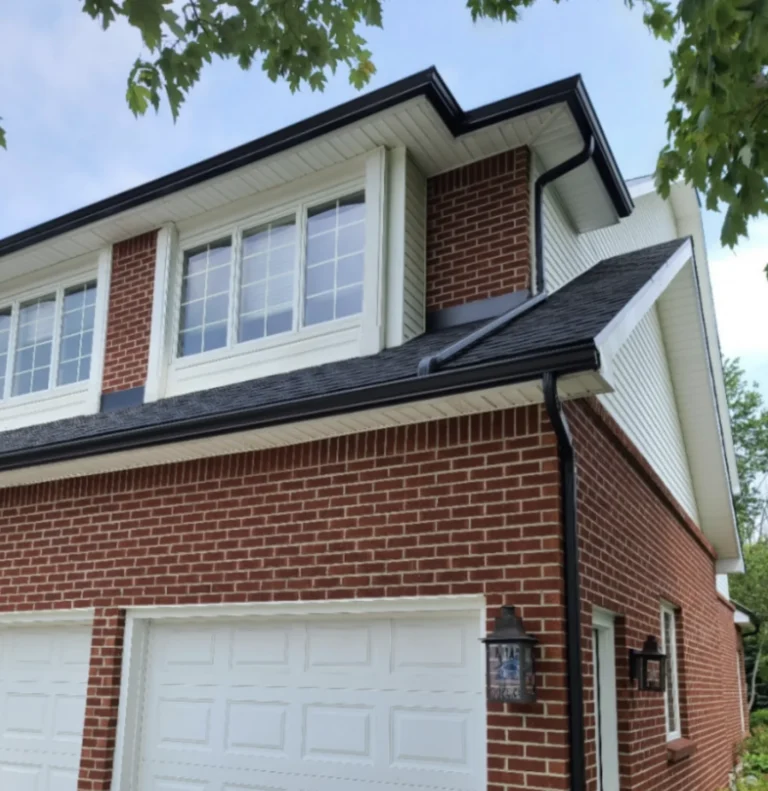
When a gutter is replaced, the first thing that matters is not the new gutter. It is the board the gutter hangs on. If the fascia behind the old gutter is sound, the project is a straightforward replacement. If it has gone soft, the new gutter has nothing reliable to hold onto, and the estimate has to change before the work starts.
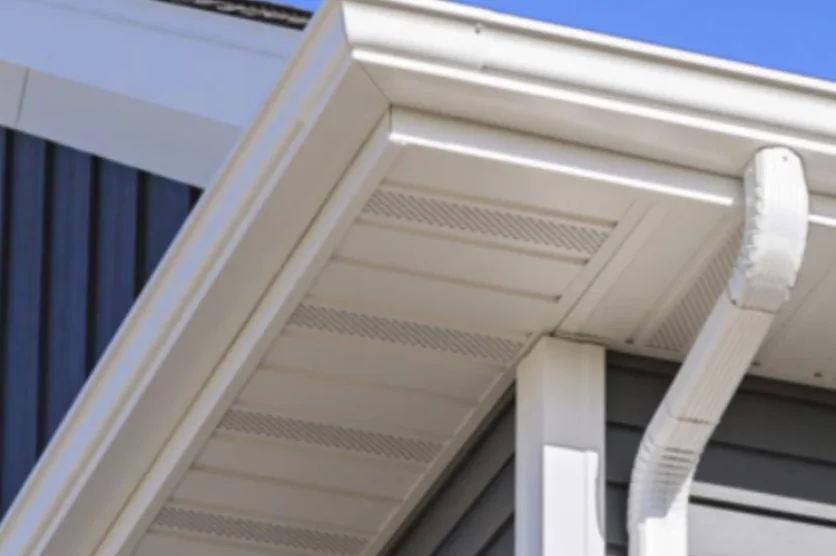
That is why a good estimate includes looking behind and below the existing gutter rather than measuring the front of it and quoting a number.
Why fascia condition matters to a gutter project
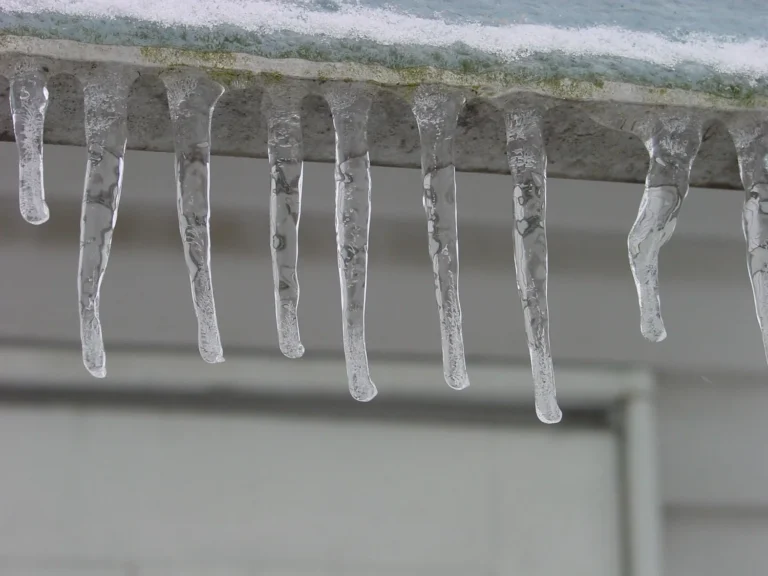
The gutter is fastened through its back wall into the fascia board at the eave. Every load the system carries, from the weight of standing water to snow sitting in the channel, transfers through those fasteners into that board.
Wood that has been wet repeatedly loses its ability to hold a fastener. It does not fail dramatically; it holds for a season or two and then lets go in the same place. A homeowner ends up with a new gutter that has started to pull away, which is a frustrating outcome when the original problem was never the gutter.
There is a second reason to care. Water that reaches the fascia usually came from somewhere above it, and the same conditions that softened the board can affect the soffit and the rafter tails behind it. Looking at all three at once is more useful than discovering the extent of it halfway through installation.
Signs the attachment surface needs attention
Some of this is visible from the ground. If any of the following is present, expect the estimate to include a closer look at the wood.
- Paint peeling, bubbling or flaking along the fascia board.
- Dark staining or a water line on the fascia or on the siding below the gutter.
- A gutter that has pulled away, sagged, or lost fasteners in one area.
- Visible soft spots, crumbling edges or a board that gives when pressed.
- Daylight or a gap visible between the gutter and the board behind it.
- Repeated water behind the gutter after rain, even when the channel is clear.
- Soffit panels that feel soft or show staining.
None of these prove how far the damage goes. That is decided on site, and it is the reason an estimate cannot be finalised from a photograph.
Work Niagara may include with the project
Where exterior wood repair is part of an approved gutter project, Niagara Gutter performs fascia, soffit, rafter-tail and related exterior wood repair and replacement. The purpose is simple: the new gutter should be fastened to sound material, and the eave should be left in a condition that will hold up.
What the estimate should tell you, in writing:
- what wood work is included, and how much;
- what is being replaced versus reused;
- whether the existing gutters and downspouts are removed and hauled away;
- what happens if more damage is found once the old gutter comes off;
- which parts of the scope are allowances and which are fixed.
That last point matters more than people expect. Hidden damage is normal on older homes, and a change-order conversation is much easier when both sides know in advance how it will be handled.
When another trade may be needed
Not every water problem at the eave belongs to a gutter contractor, and saying so is part of doing the job honestly.
If water is arriving from the shingles, drip edge or flashing, that work belongs to a contractor who installs and repairs those materials. Niagara Gutter does not perform that work. If the wood damage extends into structural framing, that is also beyond gutter and exterior wood scope.
What Niagara does not do is hang a new gutter on material that will not hold it and call the job complete. If the wood is too far gone for the repair to be sensible, that gets said before installation, not after.
What this means for your estimate
A replacement estimate is more useful when it is built from what is actually there. That means measuring the eave line, checking the surface the gutter will be fastened to, and pricing the project as one scope instead of leaving wood work to be discovered later.
For a Western New York seamless-gutter project, request a free estimate from Niagara Gutter or call 716-695-3500. Mention any staining, soft spots or gutter separation you have noticed, so the assessment starts in the right place.