The heaviest winter gutter damage in Western New York is not always caused by the biggest storm. It is caused by water that keeps stopping in the same place. Freeze, thaw, refreeze, repeated through a season, and a small restriction becomes a persistent problem.
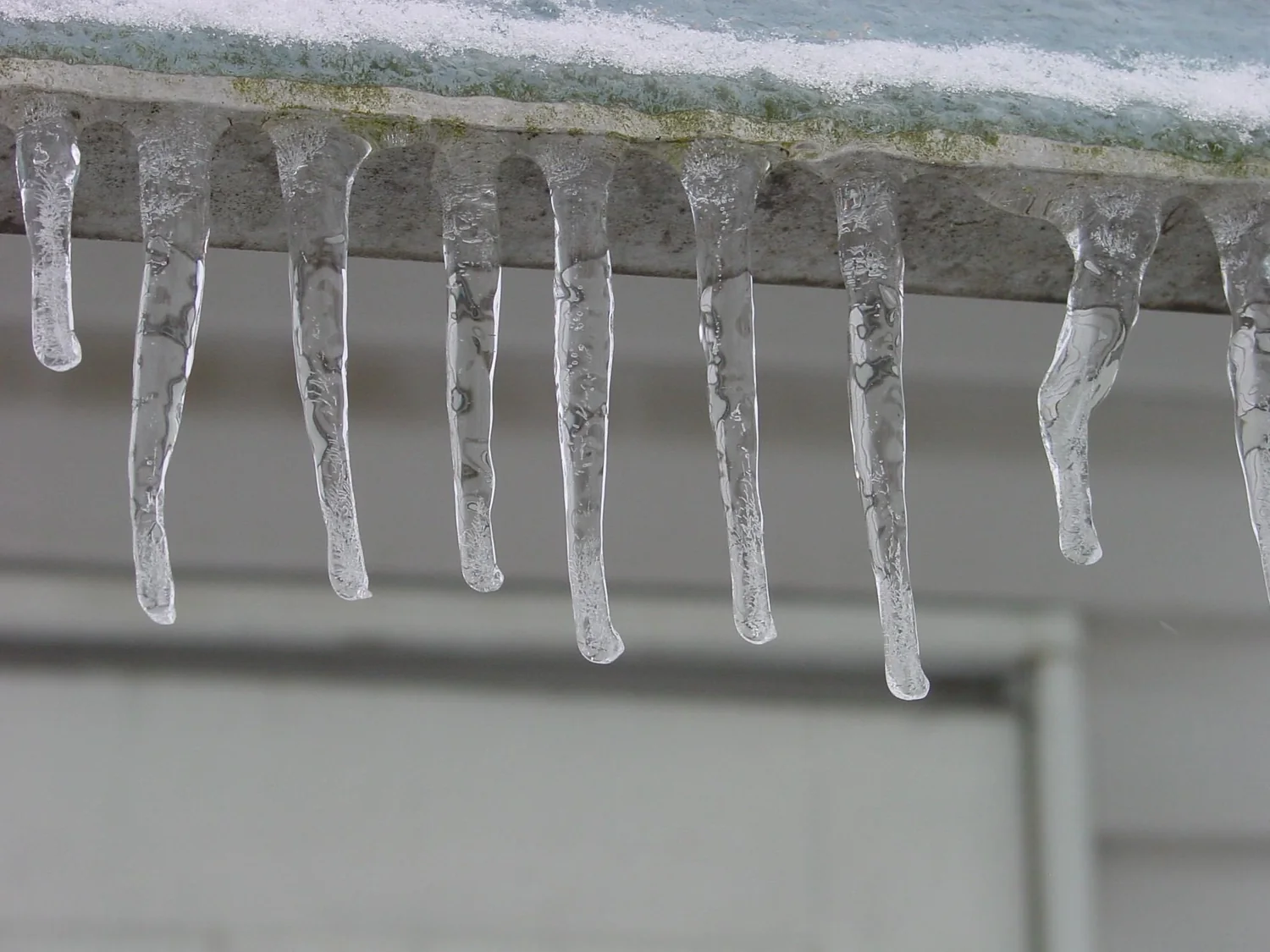
Understanding why requires looking at the whole route rather than any single part of it.
What repeated thaws mean for runoff
Western New York winters are not one long freeze. The National Weather Service’s Buffalo climate summary describes winters that are changeable, with frequent thaws and rain mixed in. Snow can sit on a building while part of it warms enough during the day to melt, and the meltwater then travels toward surfaces that are still below freezing.
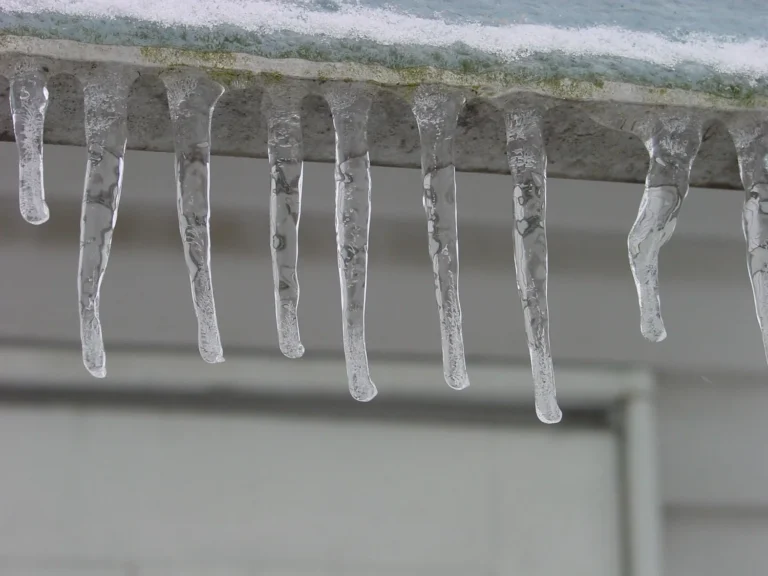
That sequence matters because the water is not arriving where gutters usually see it. It is trickling in small amounts over hours, reaching a cold gutter, and cooling further as it moves. Water that would drain easily on a mild day can refreeze before it reaches the outlet.
Where meltwater can slow and refreeze
Water freezes where it stops moving. In a gutter system those places are predictable:
- A low spot in the run. If the pitch does not carry water toward the outlet, it sits, and sitting water freezes.
- The outlet. Debris and ice collect here first, because everything leaving the gutter passes through it.
- The first elbow. A change of direction is a place where flow slows and residue collects.
- A downspout with a partial restriction. Water backs up quietly, from the bottom upward.
- The discharge point. If the bottom of the downspout is buried in snow, sitting in a frozen puddle, or draining into a drift, the whole route above it stops.
- A shaded run. Sun exposure varies around a building, and the shaded side stays cold longer.
None of these requires a dramatic blockage. Each is enough to interrupt the route, and once the route is interrupted, everything upstream of it has nowhere to go.
Why gutters and downspouts work as one route
A gutter is not a container. It is the first section of a path.
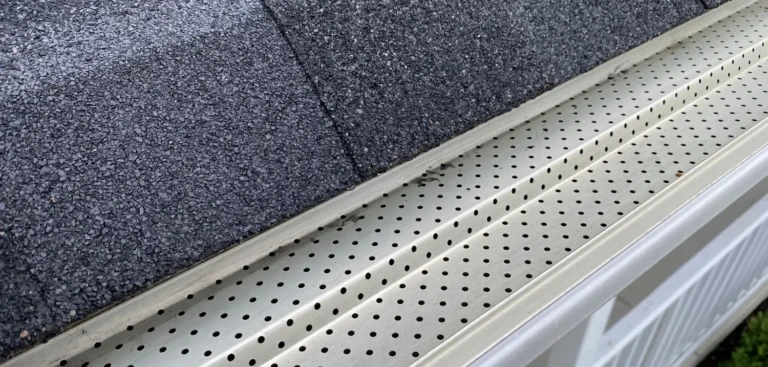
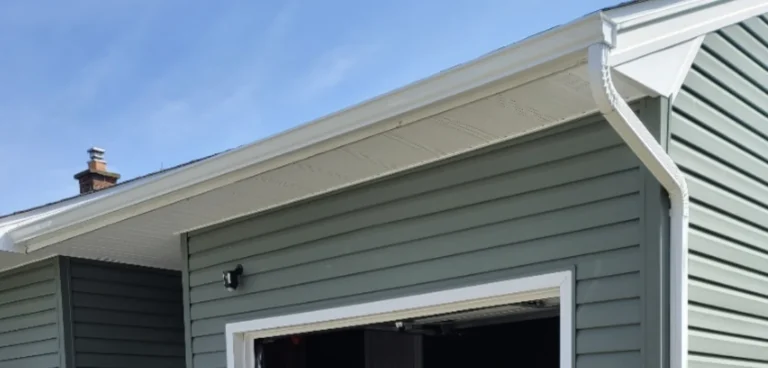
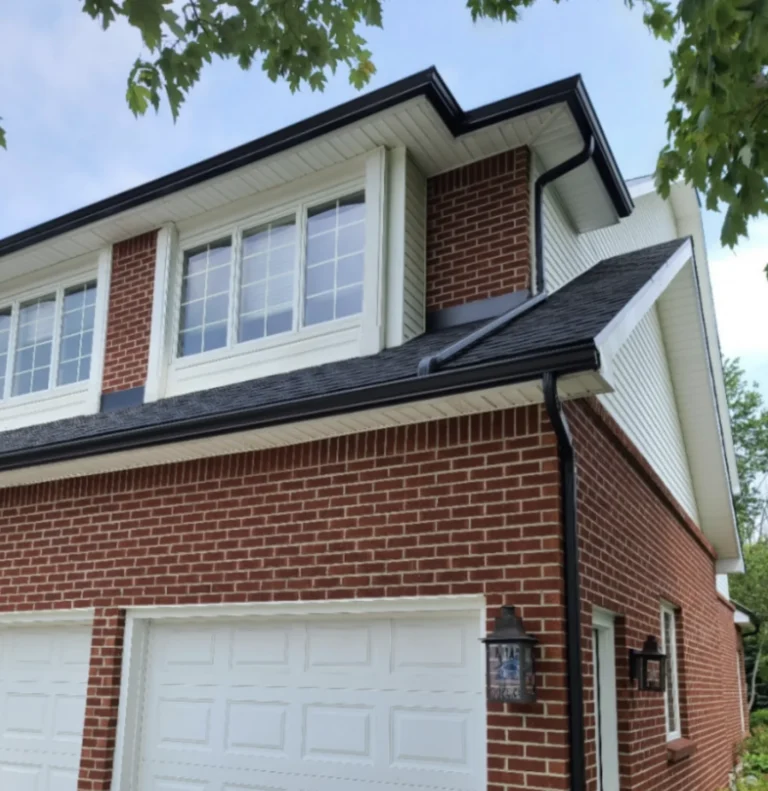
Water enters at the eave, moves along the run because of pitch, leaves through an outlet, and travels down a downspout to a discharge point. Each section depends on the next. A perfectly clear gutter above a frozen downspout is not draining anything. A spotless downspout below a gutter that holds water is not helping either.
That interdependence is the reason a piecemeal approach often disappoints. Fixing one component while leaving another restricted moves the problem rather than solving it. It is also the reason a drainage route is worth assessing as a route.
What actually helps
Before winter, the practical work is unglamorous: keep the channel and outlets clear, confirm the run moves water toward the outlet, and make sure the discharge has somewhere to go that is not the same spot all winter.
During winter, the useful activity is observation from the ground. Note where ice first appears, whether water drips long after the weather clears, and whether one downspout stops before the others. Those observations describe a pattern, and a pattern can be assessed.
Where a specific section repeatedly freezes despite a clear route, Niagara Thaw Systems uses professionally installed heat cable focused on the gutter and downspout path to help keep meltwater moving through those areas. It is aimed at maintaining a route, not at guaranteeing an ice-free building, and the assessment is what determines whether a property is a sensible fit.
When recurring patterns deserve assessment
One bad week is weather. The same place every winter is a pattern worth understanding.
It is worth an assessment when ice returns to the same run or downspout, when water backs up rather than discharging, when the problem costs you time every season, or when you have already cleared the gutters and it still happens. Those are the cases where a systematic look at the route beats another round of guessing.
To discuss a recurring winter drainage problem in Western New York, review Niagara Thaw Systems and request an estimate, or call 716-695-3500. Tell us where the water stops.