
Frozen Downspouts
How Can I Keep My Downspouts From Freezing?
Helping a downspout avoid repeated freezing starts with a clear, continuous drainage route from the gutter outlet through the downspout and discharge area. Water can freeze where it slows, remains in an elbow, meets a blocked outlet, or cannot leave the bottom of the run. Recurring problems may benefit from a professional drainage assessment.
Start with the recurring pattern
The location, timing, and repetition of winter ice often tell more than a single photograph. Use the sections below to understand the specific symptom, observe it safely, and decide whether a gutter and downspout drainage assessment may be useful.
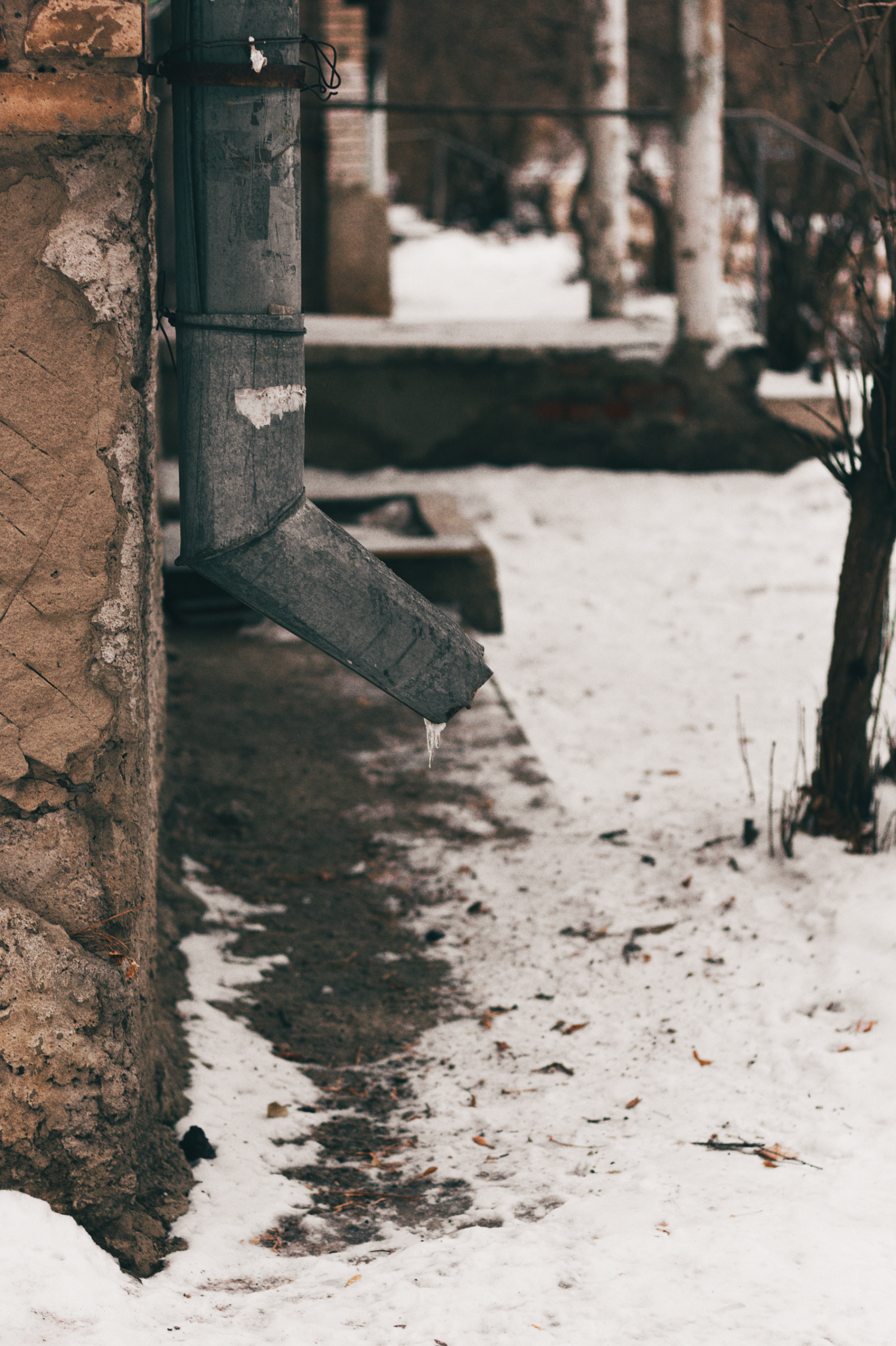
A downspout is the exit route for the gutter
A gutter can collect meltwater correctly and still back up if the downspout is frozen. Once the outlet route is blocked, new water may remain in the gutter, spill over, or refreeze around the outlet. A restriction near the bottom can affect the full run above it.
The National Weather Service recommends keeping gutters and downspouts clear so melting snow can flow through them. Clear drainage does not prevent every winter ice condition, but a blocked route gives water more opportunity to stop and freeze.
Where downspout freezing often becomes visible
Water changes direction through outlets and elbows, and those locations can be useful observation points. The bottom discharge can also become restricted by snow, ice, debris, or another obstruction. Homeowners should observe from the ground rather than opening or dismantling a frozen system during unsafe conditions.
The location of the first visible ice matters. Ice beginning at the gutter outlet may suggest a different route problem than a solid lower section or a discharge area buried in snow. Record when the blockage appears and whether water backs up into the gutter.
- Ice forms around the gutter outlet before spreading along the run.
- The downspout looks clear near the top but remains frozen near the bottom.
- Water spills over the gutter even though the gutter itself appears open.
- One downspout repeatedly freezes while another on the same property drains.
- Heavy icicles form near the outlet or along the section feeding that downspout.
Prepare the normal drainage path before winter
Before hard freezes, the gutter outlet and downspout should be able to move water normally. Visible damage, disconnected sections, buried discharge points, and obvious restrictions should be addressed through the appropriate service. Niagara does not advertise general standalone gutter cleaning, so this guidance should not be read as an offer for an unlisted service.
Do not use open flame, improvised electrical equipment, or unsafe ladder work to thaw a frozen downspout. Product-specific operation and electrical requirements belong to the selected manufacturer’s instructions and qualified professionals.
Where professionally installed heat cable may help
Niagara Thaw Systems focuses on the gutter and downspout drainage path. For a recurring downspout problem, the proposed route may include the gutter outlet and downspout so meltwater has a continuous path through the assessed area. Exact placement depends on the property and the selected system.
Heat cable is not a substitute for every drainage repair, building condition, or winter maintenance need. An estimate should identify the repeated problem area, explain the proposed scope, and set realistic expectations without promising that the entire gutter system will remain ice-free.
Frequently Asked Questions
Common questions
Can a frozen downspout make the gutter overflow?
Yes. If meltwater cannot leave through the outlet route, it may remain in the gutter, spill over, or refreeze.
Why does the bottom of my downspout freeze first?
The discharge area may be colder, covered by snow or ice, or unable to move water away. The exact cause requires observation of the full drainage route.
Can heat cable be planned through a downspout?
Niagara’s standard Thaw setup focuses on the gutter and downspout drainage path. Exact routing and suitability are determined during the assessment.
Is every frozen downspout a Thaw Systems project?
No. Damage, drainage configuration, blockage, or other conditions may require a different response. Property fit is not universal.
What information should I provide?
Describe which downspout freezes, where the ice appears first, whether the gutter backs up, and whether the same pattern returns after most thaws.
Related Gutter Answers
Ask Whether Niagara Thaw Systems Fits Your Property
Tell Niagara Gutter where gutter ice, frozen downspouts, heavy icicles, or winter drainage problems repeatedly appear.