
Recurring Icicles
Why Do Icicles Form on My Gutters?
Icicles form when liquid water reaches a cold edge, drips, and refreezes. Around gutters, that water may come from melting snow or a freeze-thaw cycle. A few small icicles can occur during ordinary winter weather, while heavy icicles that repeatedly return in one location may point to a recurring gutter or downspout drainage problem.
Start with the recurring pattern
The location, timing, and repetition of winter ice often tell more than a single photograph. Use the sections below to understand the specific symptom, observe it safely, and decide whether a gutter and downspout drainage assessment may be useful.
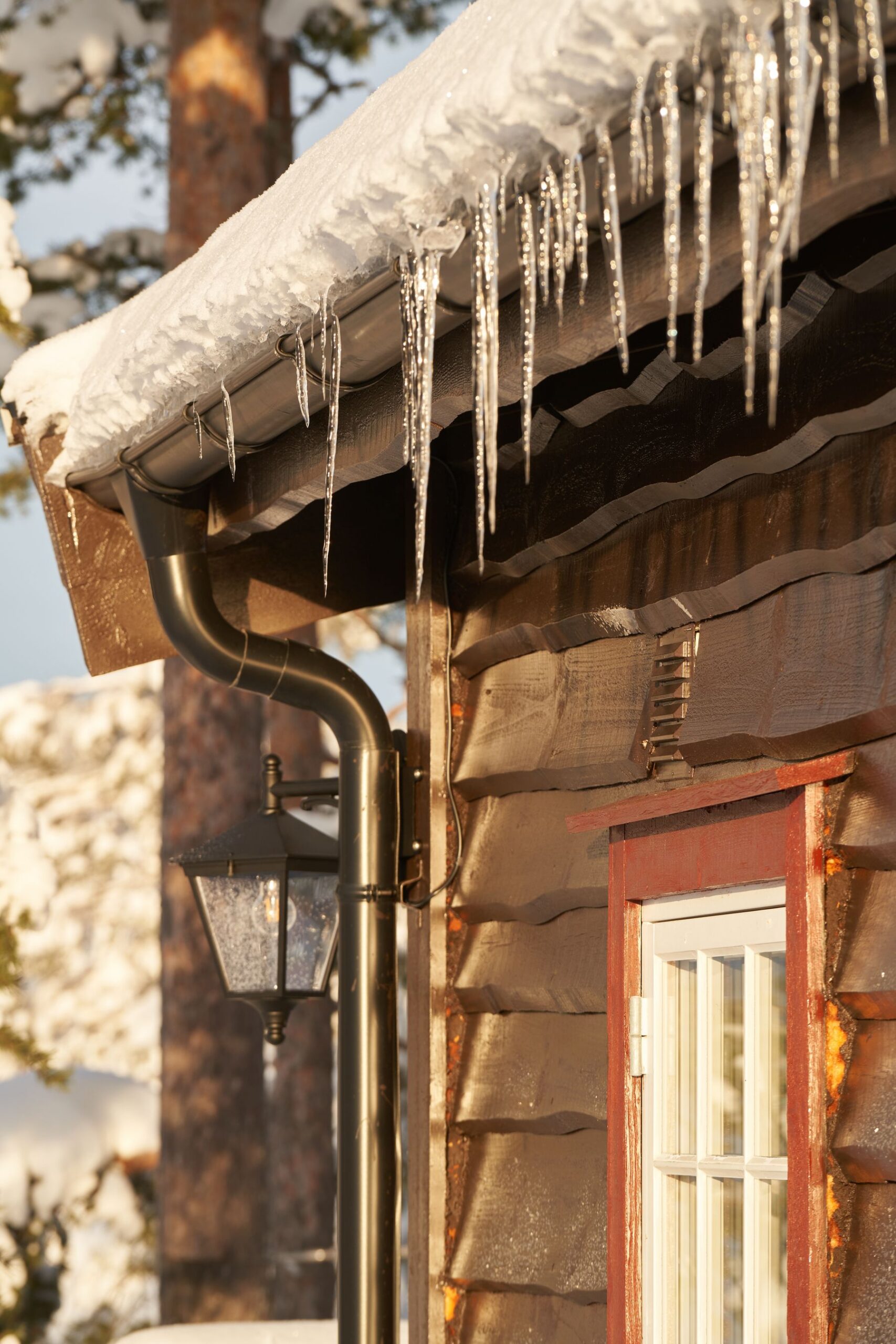
Icicles need both melting and refreezing
Ice cannot grow into an icicle without a source of liquid water. Snow or ice melts first, the water reaches a colder edge, and each drip freezes onto the last one. NDSU Extension describes ice dams and icicles as common when snow is present, heat is being lost through the roof, and outdoor temperatures are near freezing.
Sunlight can also create uneven melting. A surface may warm during the day while the gutter edge or shaded area stays cold. When temperatures fall again, water that did not leave the drainage route can freeze into a longer or thicker icicle.
What the location and pattern may tell you
One icicle does not diagnose an ice dam or prove that a gutter system has failed. The more useful clues are size, recurrence, location, and the other symptoms nearby. Heavy icicles returning below the same outlet or gutter section deserve more attention than a few temporary icicles spread around the property.
A frozen downspout or restricted outlet can leave water with nowhere to go. Water may spill over the gutter edge, drip behind or below the normal route, and refreeze. Icicles across a long section may reflect a different pattern than buildup concentrated at one downspout.
- Small, scattered icicles after a sunny winter day may be temporary.
- Heavy icicles returning in the same place suggest a repeatable water route.
- Icicles concentrated near an outlet may point to a downspout or outlet restriction.
- Gutter ice, overflow, and frozen drainage together provide more context than an icicle alone.
Treat overhead ice as a safety concern
Keep people, pets, vehicles, and frequently used entrances away from heavy overhead icicles when possible. Do not stand beneath them to strike or pull them down. Avoid climbing an icy ladder or roof to investigate. NDSU Extension specifically warns that roof snow removal can be dangerous and recommends avoiding getting on the roof.
If water is entering the building, if ice is falling over a walkway, or if the gutter appears to be pulling away, use the appropriate qualified professional for the immediate condition. Niagara’s role is limited to its gutter and downspout drainage services; it is not a roof-repair service.
Where Niagara Thaw Systems may fit
Niagara Thaw Systems may be worth discussing when heavy icicles repeatedly develop around the same gutter, outlet, or downspout. The service uses professionally installed heat cable focused on the gutter and downspout drainage path to help keep meltwater moving during freezing weather.
The objective is not to promise that every icicle disappears. It is to evaluate the recurring drainage route and determine whether targeted heat cable may help reduce buildup and maintain a path for meltwater. Exact suitability requires a property-specific estimate.
Frequently Asked Questions
Common questions
Does every icicle mean I have an ice dam?
No. Icicles can form during ordinary melting and refreezing. Recurring heavy icicles plus gutter ice, overflow, or blocked drainage provide more useful context.
Can a frozen downspout contribute to icicles?
Yes. A blocked outlet route can cause water to back up or spill where it may refreeze along the gutter edge.
Should I knock icicles down myself?
Avoid standing below heavy overhead ice or using an icy ladder. Keep the area below clear and contact an appropriate professional when the condition cannot be addressed safely.
Will Niagara Thaw Systems stop all icicles?
No universal or complete-prevention promise is made. The system may help reduce recurring buildup by supporting the assessed gutter and downspout drainage route.
What photos are helpful for an estimate?
Photos taken safely from the ground that show the full gutter section, nearby downspout, and recurring icicle location can help explain the concern.
Related Gutter Answers
Ask Whether Niagara Thaw Systems Fits Your Property
Tell Niagara Gutter where gutter ice, frozen downspouts, heavy icicles, or winter drainage problems repeatedly appear.