
Buffalo Winter Gutter Guide
Winter Gutter Ice and Drainage Problems in Buffalo, NY
Buffalo winter gutter ice can involve repeated snowmelt, freezing temperatures, restricted gutters or downspouts, and broader building conditions. Start by identifying the symptom and where water stops: the gutter run, outlet, downspout, or discharge area. Niagara Thaw Systems addresses the gutter and downspout drainage side; it is not a universal solution for every cause of ice dams.
Start with the recurring pattern
The location, timing, and repetition of winter ice often tell more than a single photograph. Use the sections below to understand the specific symptom, observe it safely, and decide whether a gutter and downspout drainage assessment may be useful.
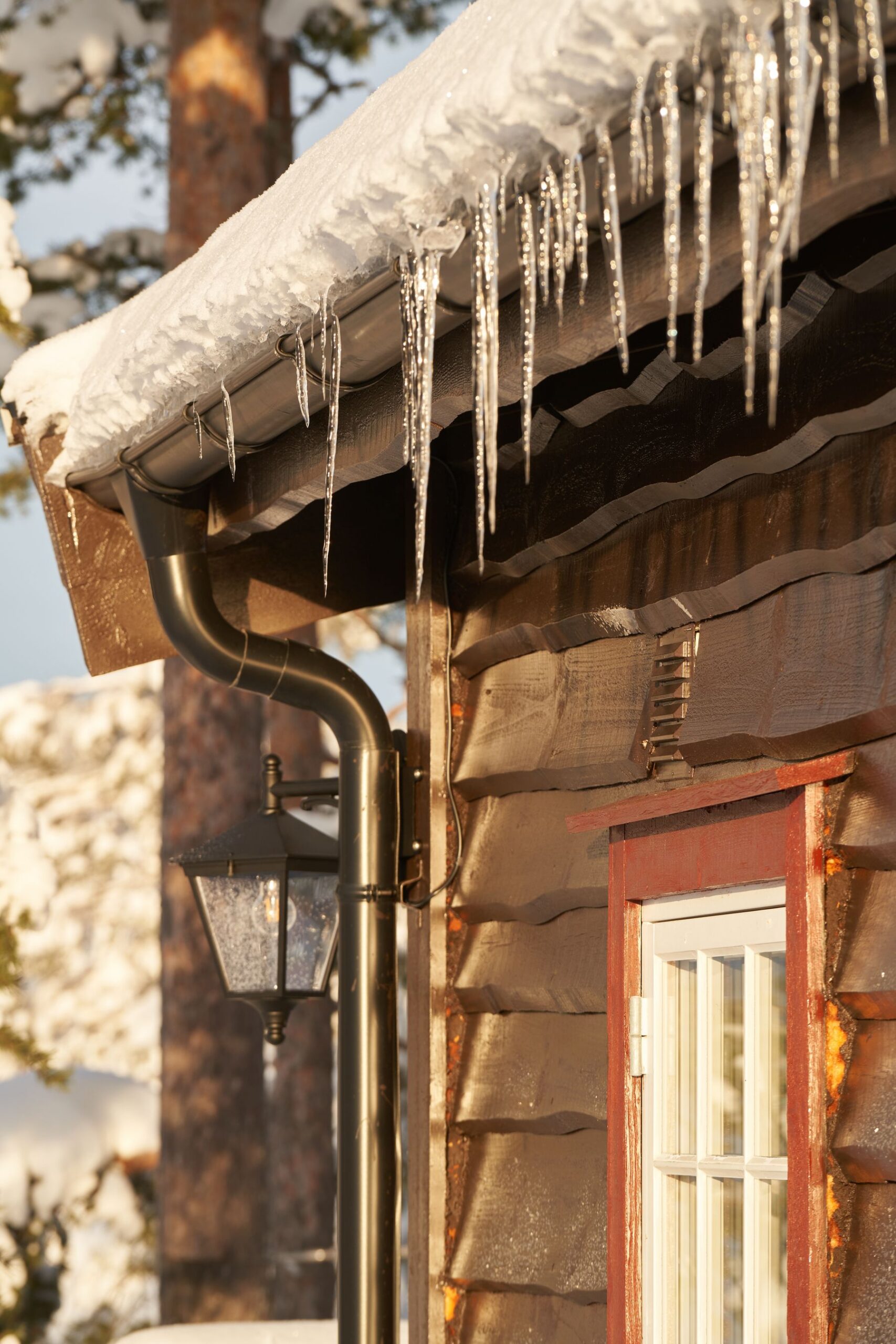
Why Buffalo properties can see repeated winter drainage problems
Northern-climate ice problems often develop through repeated melting and freezing. The National Weather Service explains that heavy snow can melt during warmer periods and refreeze when temperatures fall. University of Minnesota Extension describes how snowmelt can reach colder lower surfaces and form an ice dam.
The same property may experience different conditions around different sides of the building. Sun, shade, wind, snow accumulation, meltwater routes, gutter condition, and downspout discharge can all influence where ice returns. Local relevance should come from these real homeowner observations—not from claiming that every Buffalo property needs heat cable.
Start with the symptom you can see
Different symptoms point to different parts of the drainage route. Use them to describe the concern, not to make a final diagnosis from the ground.
| Visible symptom | Question to ask |
|---|---|
| One gutter run freezes repeatedly | Where does meltwater enter, slow, or remain in that run? |
| Heavy icicles return below one area | Is the nearby outlet or downspout moving water? |
| The gutter overflows during a winter thaw | Is the outlet route blocked or is water refreezing before it can leave? |
| A downspout freezes from the bottom | Can the discharge area release water, or is it obstructed by snow or ice? |
| Water appears inside the building | Use the appropriate qualified professional for the immediate building condition; Niagara does not diagnose roof leaks. |
Prepare the ordinary drainage route
Before winter, gutters and downspouts should be able to move water normally. The National Weather Service recommends clearing leaves, sticks, and debris so melting snow can flow through gutters and downspouts. This is general preparation guidance, not a promise that clear gutters will prevent all ice.
Niagara’s public service rules do not advertise general standalone gutter cleaning. Homeowners should use an appropriate service for preparation or repairs that fall outside Niagara’s listed work. Visible damage, sagging, disconnected components, or a blocked discharge may need a different response before heat cable is considered.
Know when the issue may involve more than drainage
Ice dams can involve uneven roof temperatures, heat loss, insulation, ventilation, snow cover, and outside temperature. A gutter or downspout system cannot correct every one of those conditions. Niagara Thaw Systems should not be described as roof protection, roof repair, or a substitute for an insulation or ventilation professional.
If there are interior water stains, active leakage, structural concerns, or conditions beyond the gutter/downspout route, use the appropriate qualified building professional. The purpose of this guide is to help separate Niagara’s drainage specialty from broader winter building problems.
Avoid unsafe winter troubleshooting
Do not climb an icy ladder or roof to diagnose gutter ice. Keep people and pets away from heavy overhead icicles and falling ice. NDSU Extension warns that roof snow removal can be dangerous and advises avoiding getting on the roof. Be aware of overhead power lines when using any long-handled tool.
Photos taken safely from the ground can still document where the problem begins, which downspout is involved, and whether the same pattern returns. That information is more useful than an unsafe close-up.
Where Niagara Thaw Systems may fit
Niagara Thaw Systems uses professionally installed heat cable focused on the gutter and downspout drainage path. It may be appropriate when a repeatable winter drainage problem occurs in an area where a planned route can help meltwater continue toward the outlet and through the downspout.
The system may help reduce recurring gutter ice, frozen-downspout conditions, heavy icicles, and gutter-system stress. It cannot guarantee an entirely ice-free gutter system or complete prevention or elimination of ice dams. Exact suitability, placement, electrical scope, and expectations belong in the property-specific estimate.
A practical Buffalo homeowner decision path
First, document the recurring symptom and its location. Second, determine whether the normal gutter and downspout route can move water. Third, separate immediate safety or building problems from a recurring drainage concern. Finally, ask whether a professional assessment is appropriate for the repeated gutter/downspout pattern.
The related answers below explore each symptom in more depth. The live Niagara Thaw Systems page explains the service and provides the estimate path.
Frequently Asked Questions
Common questions
Does Buffalo snow make every property a heat-cable candidate?
No. Weather alone does not establish suitability. Recurring symptoms, the drainage route, property conditions, and an assessment matter.
Can clear gutters still freeze?
Yes. Clear drainage helps, but meltwater, temperature, shade, retained water, downspout conditions, and broader building factors can still contribute.
Should I remove heavy icicles myself?
Avoid standing below falling ice or using an icy ladder. Keep the area below clear and use an appropriate professional when the condition cannot be addressed safely.
Does Niagara Thaw Systems prevent every ice dam?
No. It supports the gutter and downspout drainage path and cannot correct every building cause or guarantee complete prevention.
What should I photograph for an estimate?
From a safe ground location, photograph the full affected gutter run, nearby outlet/downspout, and the repeated ice or icicle pattern.
How do I request an estimate?
Call Niagara Gutter at 716-695-3500 or use the estimate-request page to describe the recurring gutter, downspout, or icicle concern.
Related Gutter Answers
Ask Whether Niagara Thaw Systems Fits Your Property
Tell Niagara Gutter where gutter ice, frozen downspouts, heavy icicles, or winter drainage problems repeatedly appear.