
Winter Gutter Ice
Why Do My Gutters Freeze Every Winter?
Gutters freeze when meltwater reaches a cold drainage system and remains there long enough to refreeze. The same area may freeze every winter because water repeatedly follows the same route, then slows near a gutter low spot, outlet, elbow, restricted downspout, or shaded section. The pattern matters more than one isolated patch of ice.
Start with the recurring pattern
The location, timing, and repetition of winter ice often tell more than a single photograph. Use the sections below to understand the specific symptom, observe it safely, and decide whether a gutter and downspout drainage assessment may be useful.
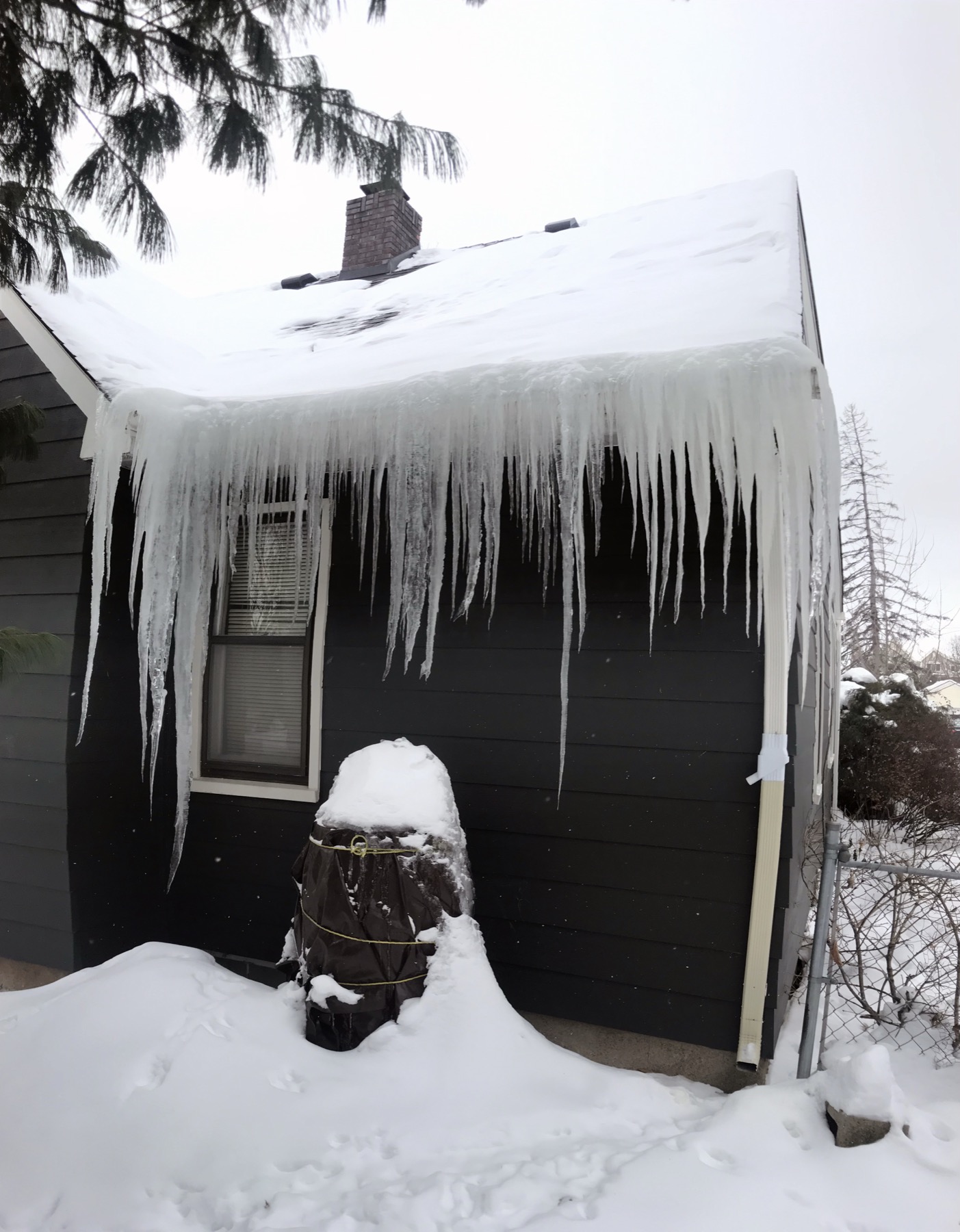
The freeze-thaw cycle brings water into a cold gutter
Snow can remain frozen while part of a roof surface warms enough for melting to begin. University of Minnesota Extension explains that snowmelt can travel toward colder lower surfaces and refreeze when it reaches them. The gutter is exposed to outdoor air, so water arriving during a thaw can become ice before the drainage route carries it away.
This is why a gutter can freeze even when no rain has fallen. The water may be coming from melting snow, direct sunlight on part of the building, or a short daytime warm-up followed by colder evening temperatures. One thaw-and-refreeze event can create a thin layer; repeated cycles can build a larger blockage.
Why the same gutter section freezes again
Recurring ice usually points to a recurring water route or a place where water slows down. A partially restricted outlet, frozen downspout, retained water, gutter condition, shade, wind exposure, and the amount of incoming meltwater can all influence where freezing returns.
A visible restriction is not the only possibility. Water may remain in a low area, reach an outlet that freezes before the rest of the run, or back up because the downspout cannot discharge. The useful question is not simply “Why is there ice?” but “Why does water keep stopping in this same location?”
- The same gutter run freezes after most thaws.
- One downspout stays frozen while another keeps draining.
- Ice begins around an outlet or elbow and spreads backward.
- Heavy icicles return below the same section.
- Water appears to spill over instead of reaching the downspout.
What homeowners can observe safely
Document the pattern from the ground rather than climbing onto an icy ladder or roof. Note whether the condition appears after snowfall, during sunny afternoons, after a temperature swing, or only on one side of the property. Photos taken safely from the ground can help show where the buildup starts and whether a downspout is involved.
Before winter, the normal drainage path should be able to move water. The National Weather Service recommends keeping gutters and downspouts clear so melting snow can drain through them. That does not guarantee ice-free gutters, because weather and broader building conditions can still matter, but it removes one avoidable restriction.
Where Niagara Thaw Systems may fit
Niagara Thaw Systems uses professionally installed heat cable focused on the gutter and downspout drainage path. Its role is to help maintain a route for meltwater through recurring problem areas during freezing weather—not to heat every surface or promise an entirely ice-free gutter system.
An assessment is most useful when the problem repeats in a specific gutter or downspout location. Niagara can discuss the observed drainage pattern, whether the property appears appropriate for the service, and what the proposed route would include. The system cannot guarantee complete prevention or elimination of ice dams.
Frequently Asked Questions
Common questions
Are frozen gutters always caused by leaves or debris?
No. Debris can restrict drainage, but meltwater volume, shade, gutter condition, retained water, frozen outlets, downspouts, and broader building conditions can also affect where ice forms.
Why does only one side of my house freeze?
Sun exposure, shade, wind, geometry, and the path taken by meltwater can differ around a property. A repeated one-sided pattern is useful information for an assessment.
Can a frozen downspout make the gutter freeze?
Yes. If the outlet route is blocked, additional meltwater may remain in the gutter and refreeze rather than leaving the system.
Will heat cable melt every bit of ice?
That is not the approved expectation. The goal is to help maintain a drainage route through assessed gutter and downspout problem areas.
What should I tell Niagara when I request an estimate?
Describe where the freezing begins, how often it returns, whether a downspout is involved, and when you notice dripping, overflow, or heavy icicles.
Related Gutter Answers
Ask Whether Niagara Thaw Systems Fits Your Property
Tell Niagara Gutter where gutter ice, frozen downspouts, heavy icicles, or winter drainage problems repeatedly appear.