
Comparing Gutter Types
Seamless vs. Sectional Gutters: What Actually Changes?
The main difference is where the joints are. Sectional gutters come in fixed lengths that are pieced together along the run, so there are seams every few feet. Seamless gutters are formed from a continuous coil to the measured length of each run, so joints are limited to corners, end caps and outlets — which is where leaks most often start.
Joints are the whole conversation
Almost every practical difference between the two comes back to one thing: how many places water has a chance to escape. A seam is a joined surface, and joined surfaces are where sealant fails, where ice works in, and where a slow drip starts. That single fact drives the appearance, the leak risk and much of the cost.
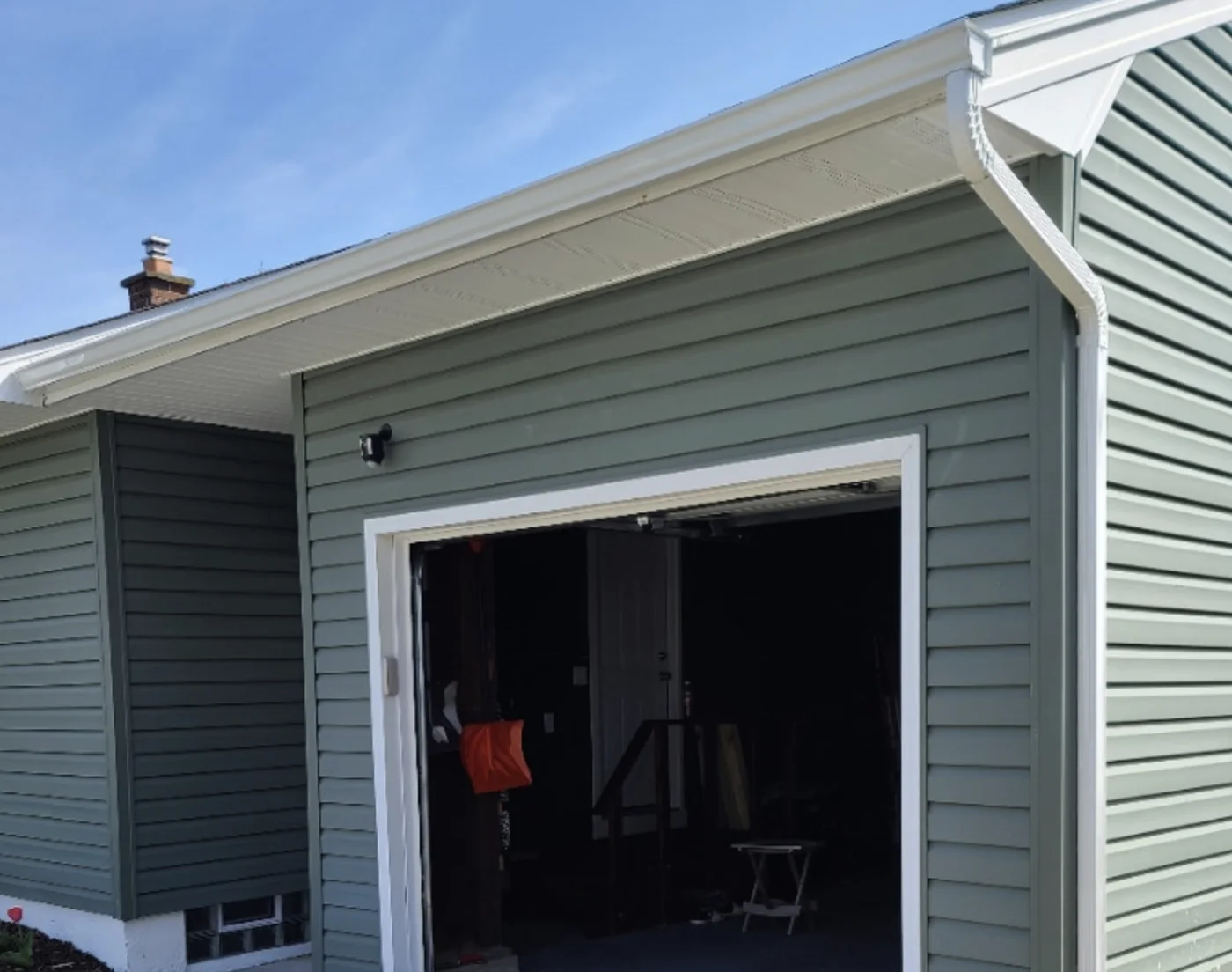
How each one is made
Sectional gutter is manufactured in standard lengths and sold as pieces. Installation means cutting sections to fit, joining them with connectors and sealant, and adding corners, end caps and outlets. On a long run, that is a lot of joined surfaces.
Seamless gutter is different in one specific way: it is formed on site. A portable machine shapes flat aluminium coil into finished gutter profile, cut to the measured length of each run. The metal arrives as a continuous piece, so the run does not need to be assembled from short sections.
Seamless does not mean joint-free. Corners, end caps, outlets and downspout connections still exist, and those joints still have to be done properly. What changes is that a straight run no longer has a seam every few feet along it.
What actually changes for a homeowner
It is easy to overstate this comparison, so here is a plain version.
- Where leaks start. Fewer seams means fewer places for a slow leak to develop along the run. The remaining joints still need correct workmanship.
- Appearance. A continuous run looks cleaner on the fascia. Connectors that break up a long run are visible from the street.
- Custom fit. Onsite forming matches the actual measurements of the building rather than assembling standard pieces to approximate them.
- Material control. Seamless work is formed from coil the installer supplies, so the gauge is part of the conversation rather than an unknown from a shelf package.
- Project scope. Seamless installation is typically a replacement project that includes removal of the old material, not an addition to existing gutter.
Where sectional gutter still makes sense
Sectional is not a scam. It has real uses: a shed, a detached garage, a small outbuilding, a temporary structure, or a repair where matching existing sectional gutter is the practical answer.
The honest question is not which product is better in the abstract. It is whether the run, the drainage area above it and the exposure justify forming a continuous piece. On a long front elevation of a house that gets lake-effect weather, that usually points one way; on a 12-foot shed, it might not.
What Niagara Gutter installs
Niagara Gutter installs seamless aluminium gutters formed on site to the measurements of each project. The primary residential systems are 5-inch and 6-inch seamless gutters, with a selection of standard colours chosen with you during the estimate.
Our published material standard is 0.032-inch aluminium. Thickness matters because a thinner section deforms more readily under ice, snow and ladder load, and a heavier section holds its shape better when the eave is carrying winter weight.
Each project is inspected and measured before installation. Gutters are formed in continuous lengths wherever practical, and installation includes proper pitch toward the downspouts, secure fastening, and downspout sizing and placement based on the drainage area, water flow and a safe discharge location. When replacement is part of the project, existing gutters and downspouts are removed as required and the jobsite is cleaned when the work is complete.
Frequently Asked Questions
Common questions
Are seamless gutters always better than sectional?
For a typical house with long runs and real winter exposure, seamless usually makes more sense because there are fewer seams along the run. For a shed, a small outbuilding or a repair that must match existing sectional gutter, sectional can be the practical choice.
Do seamless gutters ever leak?
Yes, at the joints that remain — corners, end caps, outlets and downspout connections. Seamless removes seams along the run; it does not remove every joint. Workmanship at those points is what protects the system.
Can seamless gutters be installed over my existing gutters?
No. Seamless is formed to a measured run and is installed as a system. On a replacement project the existing gutters and downspouts are removed as required.
What size seamless gutters do you install?
The primary residential systems are 5-inch and 6-inch. The right choice depends on the drainage area feeding each run, the pitch, the downspout plan and where water can safely discharge, which is reviewed at the estimate.
How much do seamless gutters cost?
Pricing depends on the measured footage, the size and colour you choose, the number and location of downspouts, access, and any related eave work. Every project is inspected and measured before an estimate is prepared, so a useful number cannot be given without that.
Related Gutter Answers
Compare Options With Real Numbers for Your Home
Tell Niagara Gutter how long your runs are, whether the existing gutters are being replaced, and what problem you are trying to solve. We will measure the eave line and give you a written estimate covering size, colour, downspouts and removal.