
Water at the Foundation
Can Clogged Gutters Cause Water in My Basement?
Clogged or overflowing gutters can contribute to water at the foundation. When rainwater cannot drain through the gutter and downspout, it ends up on the ground next to the house instead of being carried away. Gutters are one part of that story — grading, soil and foundation condition matter too — so the cause is worth identifying rather than assuming.
Where the water actually goes
A gutter system exists to move rainwater away from the building. When any part of that route stops working, water has to go somewhere, and the path of least resistance is usually straight down the wall and into the ground beside the foundation. That is why a gutter problem can show up as a damp basement rather than an obvious overflow you would notice from the driveway.
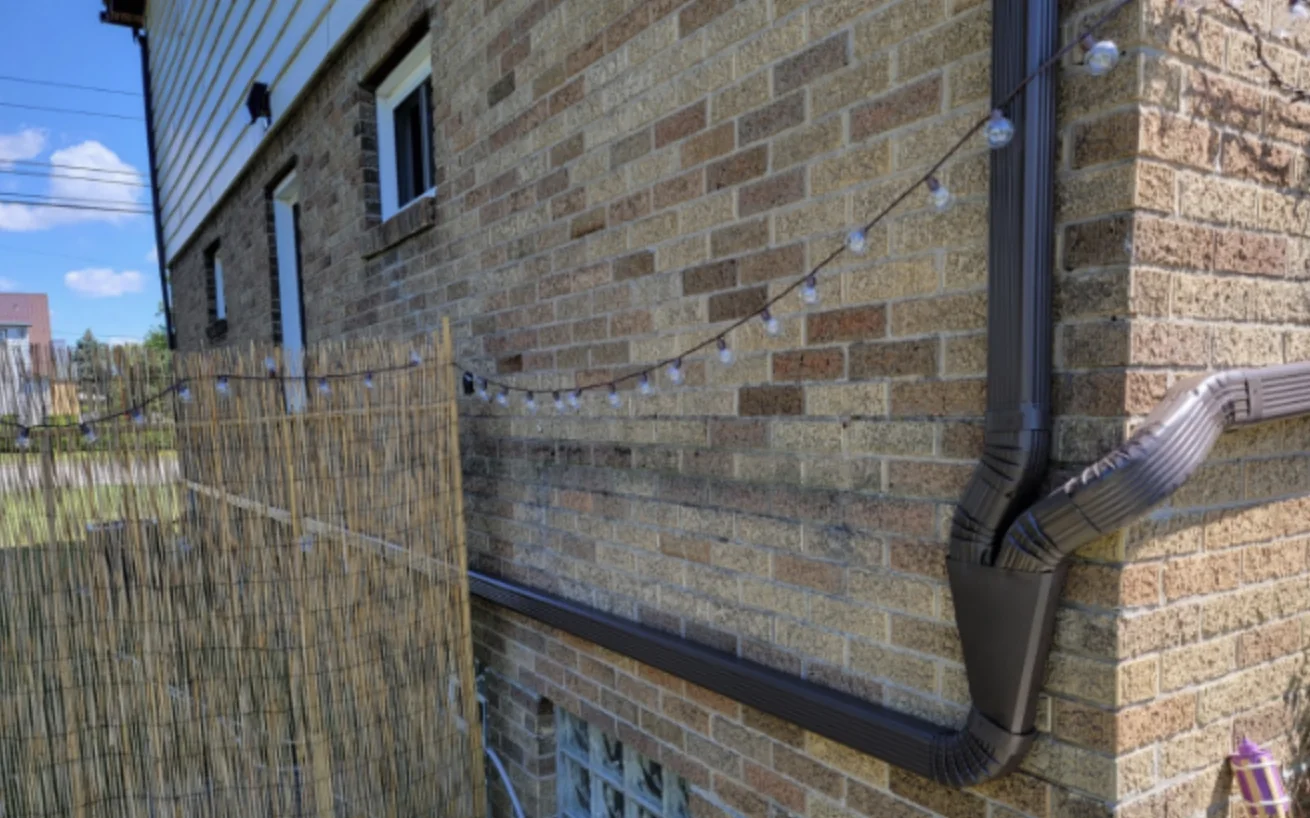
How rainwater ends up next to your foundation
There are two separate failures that both put water in the wrong place.
The first is overflow. When a gutter fills with debris or cannot keep up, water spills over the front edge and lands in a line along the base of the wall. The second is discharge. Even a gutter that drains perfectly can deliver all of that water to one spot inches from the house if the downspout ends there.
Both cases produce the same result: a concentrated, repeated dose of water exactly where you least want it. A single storm is usually not the problem. The problem is that the same corner gets soaked every time it rains, all season.
What usually causes the overflow
Overflow looks dramatic in heavy rain, but the cause is often ordinary.
- Debris in the channel. Leaves, seed pods, grit and pine needles reduce how much water the gutter can carry.
- A restricted outlet or downspout. Water backs up in the gutter because it cannot leave fast enough, even if the channel itself looks clear.
- A sagging or poorly pitched run. Water sits in a low section instead of moving toward the outlet.
- Too few downspouts for the drainage area above. A long run with one outlet can be overwhelmed in a downpour.
- A downspout that empties at the wall. Nothing is wrong with the gutter, but the water never gets away from the building.
Signs worth paying attention to
Not every damp basement is a gutter problem, but these are the observations that make it worth looking at the rainwater first.
- Water appears during or shortly after rain, rather than in dry weather.
- Dampness or staining is concentrated in one area rather than across the whole wall.
- You can see a downspout emptying onto a walkway, patio or planting bed against the house.
- The soil or mulch beside the foundation stays wet long after other areas dry.
- The ground slopes back toward the wall instead of away from it.
- You have noticed the gutter spilling over the front edge during heavy rain.
What you can check safely from the ground
Stand back during a steady rain and watch the eave. You are looking for two things: whether water is leaving the gutter over the front edge anywhere, and where each downspout is putting the water.
Then walk the perimeter on a dry day. Note any downspout that ends at the wall, any low spot where water would collect, and whether the ground falls away from the building or back toward it. Photographs help, particularly of the same corner before and after a storm.
Do not climb a ladder to investigate a drainage problem. Anything you need for an estimate can be described from the ground, and the assessment will look at the system properly.
What gutter work can and cannot fix
This is where honesty matters more than a sales pitch.
Niagara Gutter installs, replaces, reroutes and extends downspouts, and evaluates where rainwater is going so the discharge makes sense for the property. That work can genuinely change how much water lands next to a wall.
What we do not do is represent ourselves as an underground drainage, plumbing or waterproofing contractor. If the water problem requires a buried line, a sump, foundation work or excavation, that belongs with the appropriate trade, and we will say so rather than sell a gutter solution to a problem gutters did not cause.
It also matters that gutters are not the only variable. Grading, soil type, foundation age and condition all affect how a wet basement behaves. A good gutter system removes one significant load from that picture. It does not promise a dry basement on its own.
Frequently Asked Questions
Common questions
Can clogged gutters really cause a wet basement?
They can contribute to one. When gutters overflow or downspouts discharge at the wall, rainwater is deposited next to the foundation instead of being carried away. Whether that shows up as a damp basement depends on the grading, soil and condition of the foundation.
Will new gutters fix my basement leak?
Not necessarily. New gutters can stop a specific cause — overflow or discharge too close to the wall — but a leak caused by grading, foundation condition or groundwater is a different problem. Anyone promising a dry basement from a gutter replacement alone is overpromising.
What should a downspout discharge into?
Somewhere that carries the water away from the building rather than into it. For many properties that means an extension that moves the outlet further from the wall and onto ground that falls away. The right answer depends on the property, which is why it is decided at the estimate.
Do you install underground drainage?
No. Niagara Gutter works within gutter and downspout scope. Underground drainage, plumbing and waterproofing are outside our trade and are referred to or coordinated with the appropriate contractor.
Can ice and snow make this worse?
Winter conditions can intensify it. A frozen outlet or downspout leaves meltwater with nowhere to go, so rainwater can end up at the wall instead of draining away, and repeated freeze-thaw cycles keep the area wet.
Related Gutter Answers
Find Out Where Your Rainwater Is Going
Tell Niagara Gutter where the water shows up, whether a downspout empties near the wall, and whether you see the gutter overflowing during rain. The estimate looks at the gutter, outlets and downspout route together.