
Gutter Condition
Why Are My Gutters Pulling Away From the House?
A gutter usually pulls away when the fasteners holding it stop gripping. That can mean the wood behind the gutter has softened, the hangers are too few or have loosened, or the gutter has been carrying more weight than it should from snow, ice or standing water. The gap itself is the symptom; the wood behind it is often the real question.
The gap is a symptom, not the whole problem
A gutter hangs on the board that runs along the eave, called the fascia. When you can see daylight between the gutter and that board, or the run has started to sag forward, something in that connection has changed. The useful next question is not only how to push the gutter back up, but what it was fastened into and whether that material still holds.
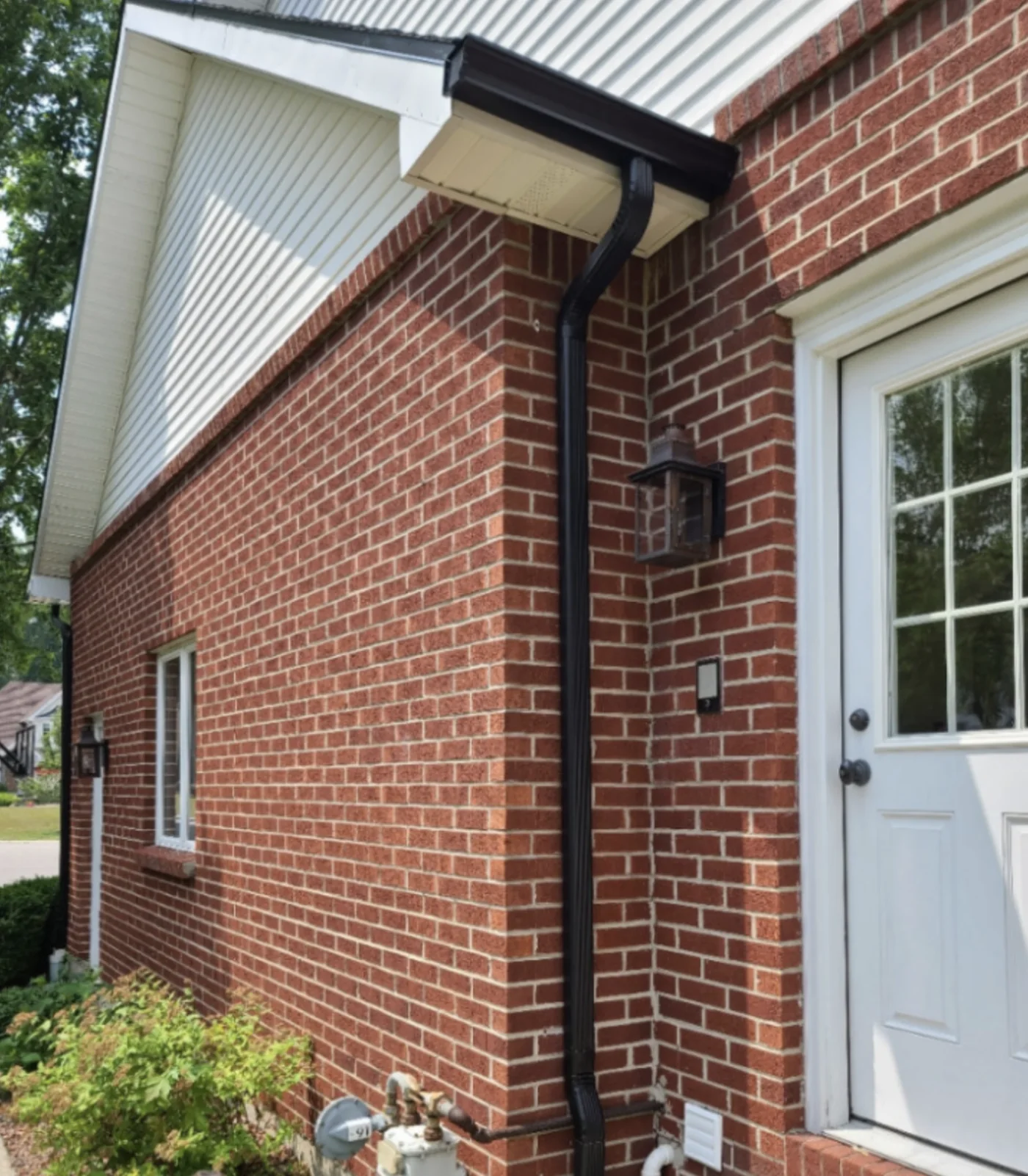
The common reasons a gutter lets go
Most cases come back to one of a handful of causes. Several can be present at once on an older home.
Age and movement matter too. Wood that was sound when the system was installed can soften over years of water exposure, and a gutter that was fine for a decade can start to separate after a hard winter. The observation worth making is whether the gap is at one spot or along a whole run.
- Fasteners that have lost their grip. Hangers work loose over time, especially where the gutter has been moving or carrying weight.
- Soft or rotted fascia and rafter tails. If the wood behind the gutter no longer holds a screw, nothing attached to it will stay put for long.
- Weight from snow and ice. A gutter full of frozen material is carrying a load it was not designed to hold through a Western New York winter.
- Standing water. A blocked gutter or restricted outlet holds water, and water is heavy over a long run.
- Impact or ladder damage. A bumped section, a ladder leaned in the wrong place, or debris washing down from above can start a separation.
- An installation that never suited the eave. Some gutters were fastened with too little support for the run and the exposure from the beginning.
Why re-nailing into soft wood does not fix it
The tempting fix is to drive new fasteners and pull the gutter back into place. If the board behind it is soft, those fasteners will hold for a short time and then let go again, usually in the same place. The gutter looks repaired and the underlying condition is unchanged.
This is also why Niagara Gutter does not offer standalone re-hanging or re-nailing of existing gutters. Re-securing a gutter to material that cannot hold it does not solve the customer’s problem, and it is not work we can stand behind. Repairs are evaluated individually, and when an existing system has reached the point where repair is not a sensible long-term answer, the honest recommendation is replacement rather than a repair that will not last.
Where exterior wood work is part of a gutter project, Niagara Gutter does perform fascia, soffit, rafter-tail and related repair. We stay within gutter and exterior wood work; anything outside that scope is referred to or coordinated with the appropriate trade.
What you can check safely from the ground
Do not climb a ladder to inspect a gutter that has started to move, and do not lean a ladder against a loose run. Everything useful can be noted from the ground:
- Stand back and look along the run. A sagging section is easier to see from a distance than close up.
- Note whether the gap is one spot, one full side of the house, or several runs.
- Look for staining or dark streaks on the fascia or the siding below the gutter.
- Check whether the gutter is holding water, or whether it overflows during rain instead of draining.
- Note any ice that forms in the same place each winter, and where it starts.
- Take photos during a steady rain if you can do it safely. That is the clearest evidence of how the system is actually behaving.
Where Niagara Gutter fits
An assessment looks at the gutter, the surface it attaches to, the outlets and the downspout route together, because they affect one another. That is also the point at which the repair-or-replace question can be answered honestly rather than guessed at from the driveway.
If the system is sound apart from a section, that is worth knowing. If the wood behind it has failed across a run, or the gutters are past their useful life, a replacement estimate can treat the gutter and the eave condition as one project instead of two separate problems.
Frequently Asked Questions
Common questions
Is a gutter pulling away an emergency?
It is worth addressing promptly. A separated gutter can spill water against the siding and foundation, and the gap tends to grow. It is not usually a same-hour emergency, but it is not something to leave through a winter either.
Can a gutter be repaired, or does it need replacing?
It depends on what the fastener is going into. If the fascia is sound and the issue is isolated, repair may be sensible. If the wood behind the run has failed, or the gutters are old and repeatedly failing, replacement is often the more durable answer. That judgement needs to be made on site.
Does snow and ice cause gutters to pull away?
Heavy snow and ice add significant weight, and a gutter that is holding frozen material is under load for weeks at a time. That weight can finish off a connection that was already weakening from age or soft wood.
Will gutter guards prevent this?
No. Gutter protection reduces debris entering the gutter, but it does not change how the gutter is fastened or the condition of the wood behind it, and it does not remove the weight of snow and ice.
Does Niagara Gutter re-attach existing gutters?
We do not offer standalone re-hanging or re-nailing of existing gutters. Repairs are evaluated individually, and where repair is not a sensible long-term solution we will recommend replacement rather than a repair that will not hold.
Related Gutter Answers
Get an Honest Answer About Your Gutters
Tell Niagara Gutter where the gap is, how long you have noticed it, and whether the gutter holds water or overflows. We will look at the gutter and the eave together and tell you plainly whether repair or replacement makes more sense.