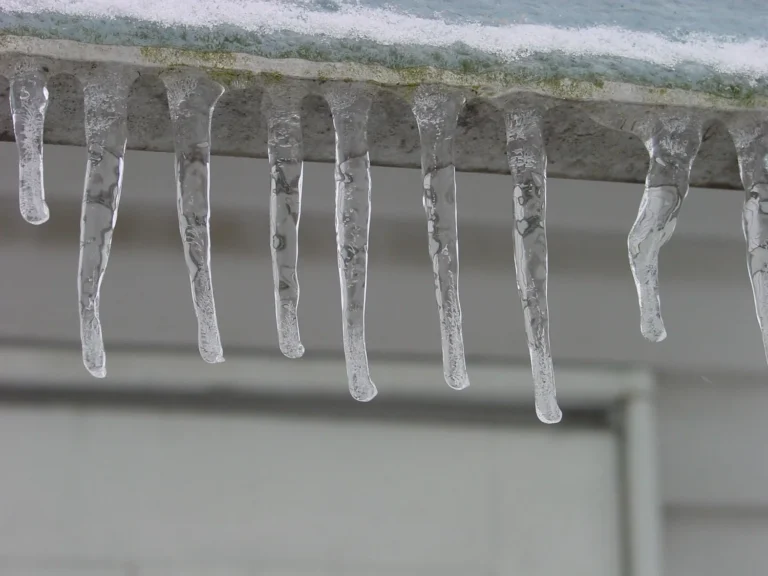
A recurring gutter ice assessment looks at where meltwater travels, where it slows or stops, and why the same part of the drainage route becomes a trouble spot. The gutter, outlet, downspout, and discharge point all deserve attention before an installation is recommended. A photograph of icicles can show the symptom, but it cannot establish the cause or the right scope of work.
If the same gutter keeps icing up on your Western New York home, prepare for an assessment by documenting the location and timing of the problem. The goal is to give the conversation more useful detail than “we get ice every winter.”
Why the repeat location matters
Winter ice can appear in many places, but a recurring location gives an assessment a starting point. Perhaps the same outlet becomes surrounded by ice, one downspout stops draining, or icicles repeatedly return over a particular entrance. Those patterns help identify which part of the route needs closer consideration.
Timing adds context. Note whether the problem appears after snowfall, during a daytime thaw, or after temperatures fall again. The National Weather Service explains that repeated melting and refreezing can contribute to ice-dam conditions. That does not mean every icicle is an ice dam, or that every recurring ice problem has the same cause.
For a broader explanation of the freezing process, see why gutters can freeze every winter. An assessment takes the next step: considering how that general process relates to the specific drainage route on your property.
Start with the gutter and outlet
A gutter needs to move water toward an outlet before the downspout can carry it away. An assessment can consider whether the gutter appears to retain water, whether an outlet is restricted, and whether the condition of the gutter or its connections is contributing to the concern.
A low area and a blocked opening are different problems. They may also exist together. It is more useful to identify the condition than to assume heat cable, a larger downspout, or a replacement gutter will solve everything by itself.
Debris matters because leaves and other material can interfere with drainage. The National Weather Service specifically identifies clear gutters and downspouts as important for moving melting roof snow. If debris appears to be involved, ask what attention the existing drainage route needs before discussing a Thaw installation.
Tell the estimator about any overflow or standing-water concern you have noticed outside winter, too. A problem that also appears in rain may provide useful context when discussing winter drainage.
Follow the downspout and the final discharge
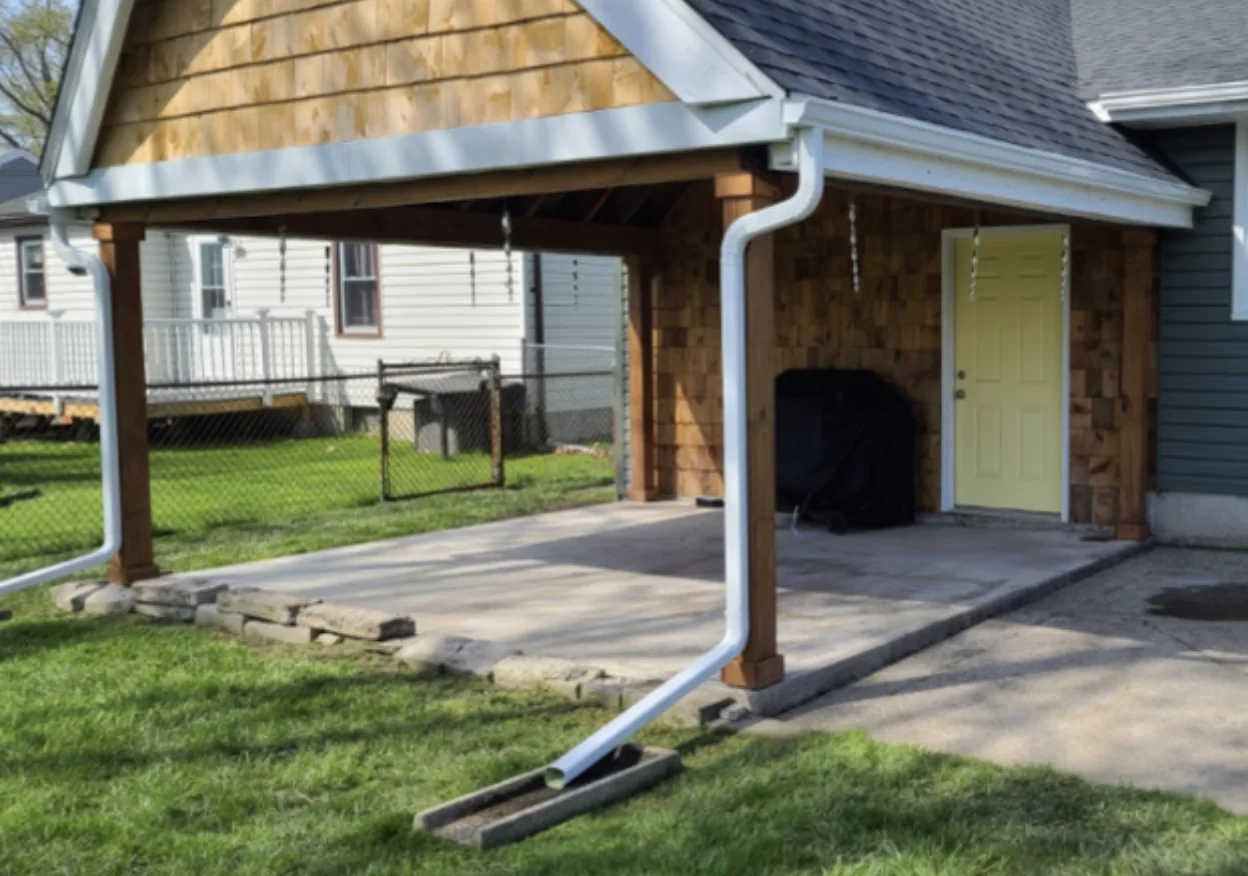
The visible gutter section is only part of the route. Water still needs to pass through the outlet, travel down the downspout, and leave through an appropriate discharge point. A restriction farther along that route can matter even when the gutter above it appears open.
Useful observations include ice repeatedly appearing around an elbow, water spilling near the outlet, or a bottom opening that becomes surrounded by snow and ice. These are clues to discuss, not diagnoses you need to make yourself.
If the downspout connects to an extension or underground drainage, mention that connection. Do not assume the unseen route is clear simply because water enters it. What is included in the gutter assessment, and whether a separate drainage specialist is needed, should be clarified before work is agreed.
The same applies to discharge near walkways and entrances. Explain where water or ice creates a recurring concern. A recommendation should consider the route as a whole rather than moving the visible symptom to another location.
Include exposure and timing without jumping to a conclusion
One side of a property may behave differently from another. Shade, sun exposure, and changing weather can help explain why a particular location deserves attention. However, a shaded gutter is not automatically defective, and sunlight on a roof does not identify the cause of an interior leak.
Describe what you actually observe: which side develops the problem, whether nearby gutters keep draining, and whether the buildup returns under similar conditions. Avoid treating a single photo or one unusually severe storm as proof that a specific product is required.
Some winter problems also involve roof or building conditions beyond the gutter system. Roofing, insulation, and ventilation concerns may need the appropriate professional. A gutter-focused recommendation should not be mistaken for a roof-repair or whole-building assessment.
What Niagara Thaw Systems may address
Niagara Thaw Systems uses professionally installed heat cable focused on the gutter and downspout drainage path. It helps create and maintain a route for meltwater during freezing weather and can help reduce recurring gutter ice, frozen-downspout conditions, heavy icicles, and excess weight and stress on gutter components.
The assessment helps determine whether that approach fits the recurring concern. The proposal should relate the recommended route to the gutter, outlet, and downspout areas involved, rather than presenting every home as needing the same installation.
Ask how the proposed work supports the drainage path, what existing conditions need attention, and what remains outside the scope. Niagara’s standard Thaw setup focuses on gutters and downspouts; do not assume it includes roof-eave cable, roof repairs, underground-drain work, or electrical alterations.
Discuss practical expectations alongside the recommendation. Supporting winter drainage is different from promising an entirely ice-free gutter system or complete ice-dam prevention. Property conditions and winter weather still matter.
What to gather safely before the conversation
- The location: identify the gutter run, outlet, downspout, entrance, or corner involved.
- The pattern: explain whether it returns after snow, during thaws, or when temperatures drop again.
- Ground-level photos: share existing pictures that show the wider route, not only a close-up of one icicle.
- Other drainage symptoms: mention overflow in rain, a visibly disconnected extension, or a concern at the discharge point.
- Previous work: describe any known gutter changes or existing heating equipment without guessing its specifications.
Stay clear of falling ice and loose components. Do not climb an icy ladder, reach into a frozen outlet, pull on heating cable, or chip ice from the gutter to collect information. If there is active leaking, damaged equipment, or an immediate safety concern, seek appropriate professional help rather than waiting for a routine estimate.
Questions worth asking before approving work
A useful discussion should connect the recommendation to the problem you described. Ask which part of the drainage route is being addressed, what the installation includes, and whether any existing gutter or downspout condition needs separate attention.
Also ask what you should understand about operation and any property-specific requirements. Equipment details, electrical needs, maintenance responsibilities, and warranty terms should come from the actual proposal and applicable product information, not assumptions based on another property’s setup.
You do not need to arrive with a diagnosis. Clear observations and a few practical questions help establish whether the proposed work is a sensible response to the recurring condition.
Discuss your recurring gutter ice problem
If the same gutter or downspout area keeps icing up, tell Niagara Gutter where it happens and when it returns. Call 716-695-3500 or request a free estimate to begin a property-specific conversation about Niagara Thaw Systems.